
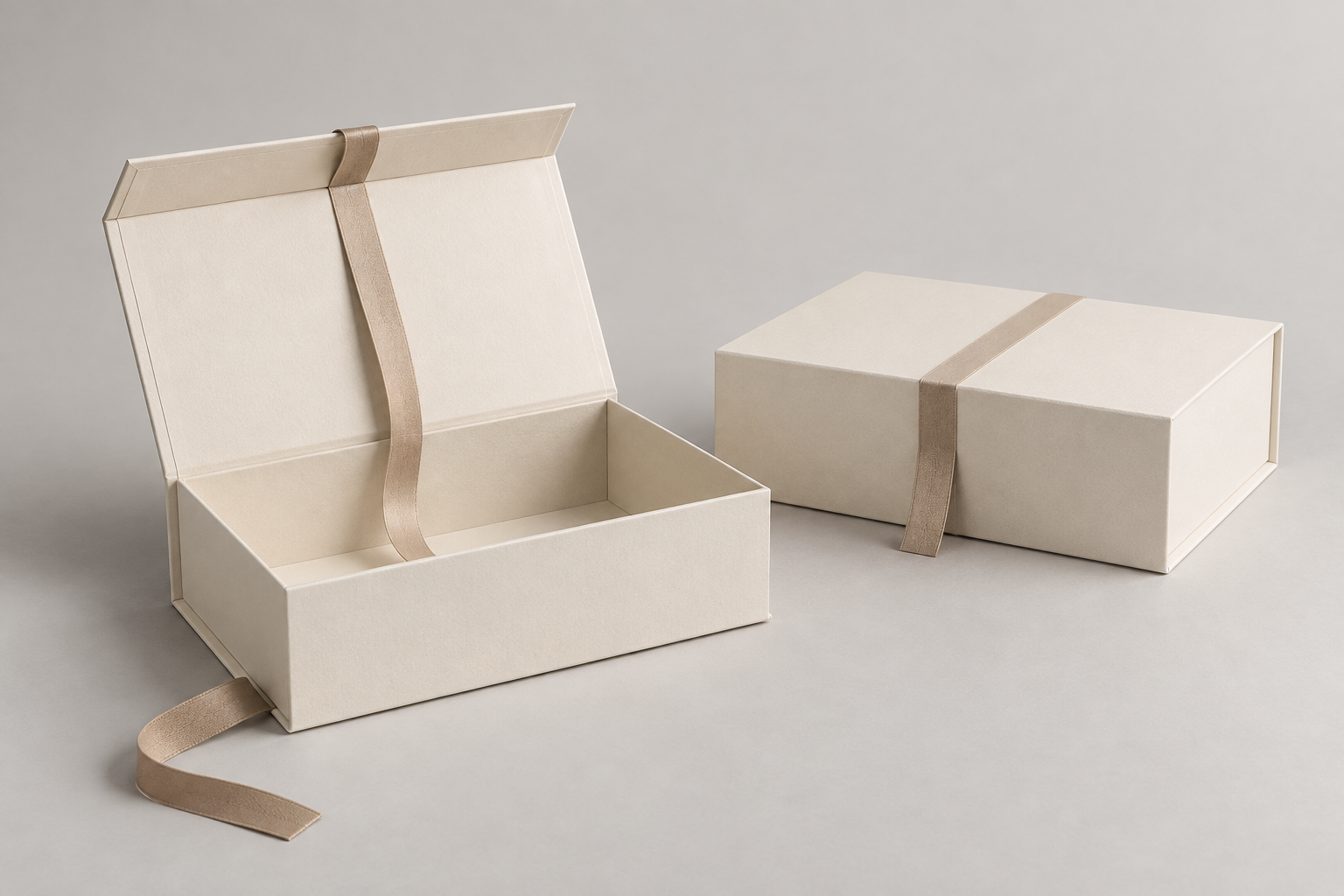
Mark three views before choosing ribbon placement
Label the drawing revision and give each view an ID. At each stage, mark the face intended to remain visible, the proposed ribbon position and an arrow for the hand movement. Distinguish the hand arrow from the panel movement or item-removal arrow. These marks record intended use; they do not establish a manufacturable channel.
- Closed presentation: identify the artwork face that should be visible at handoff. Mark the proposed ribbon area and ask whether it covers any intended text or logo. Record whether the ribbon is decorative, intended to assist opening, or still undecided.
- First opening: show where the hand approaches, which edge or panel moves, and the proposed ribbon position during that motion. Ask whether the ribbon crosses either path and whether it would need to be moved before opening. Keep the answer open until the drawing and sample support it.
- Item removal: mark the lifting direction and access to the actual contents or proposed insert. Ask whether the ribbon remains with the box, is removed, or must be moved aside, and whether that action would cover the intended visible face.
- For each view ID, record the specific question, the person responsible for the next design review and its status. Add an actual sample ID, revision and observation in a separate field when available. Retain “open” where there is no evidence; a marked sketch is not a sample observation or approval.
Hypothetical question: “View B shows the ribbon crossing the first-opening edge; review whether it must be moved before the hand lifts that panel.” This is an example of a question to resolve, not a customer project or confirmed closure.
The concept images on this page do not supply those three project-specific views. They are discussion aids, not factory photographs, customer work, production samples or evidence of final dimensions, material, fit, testing or approval.
Keep ribbon placement inside the same brief
A ribbon placement only has meaning in relation to the opening edge and the surfaces a recipient sees. Annotate the proposed visible location, whether it is exterior or interior, and the point in the opening sequence where it matters. If a retained ribbon, pass-through or channel is being considered, leave it explicitly for project review rather than calling it confirmed construction.
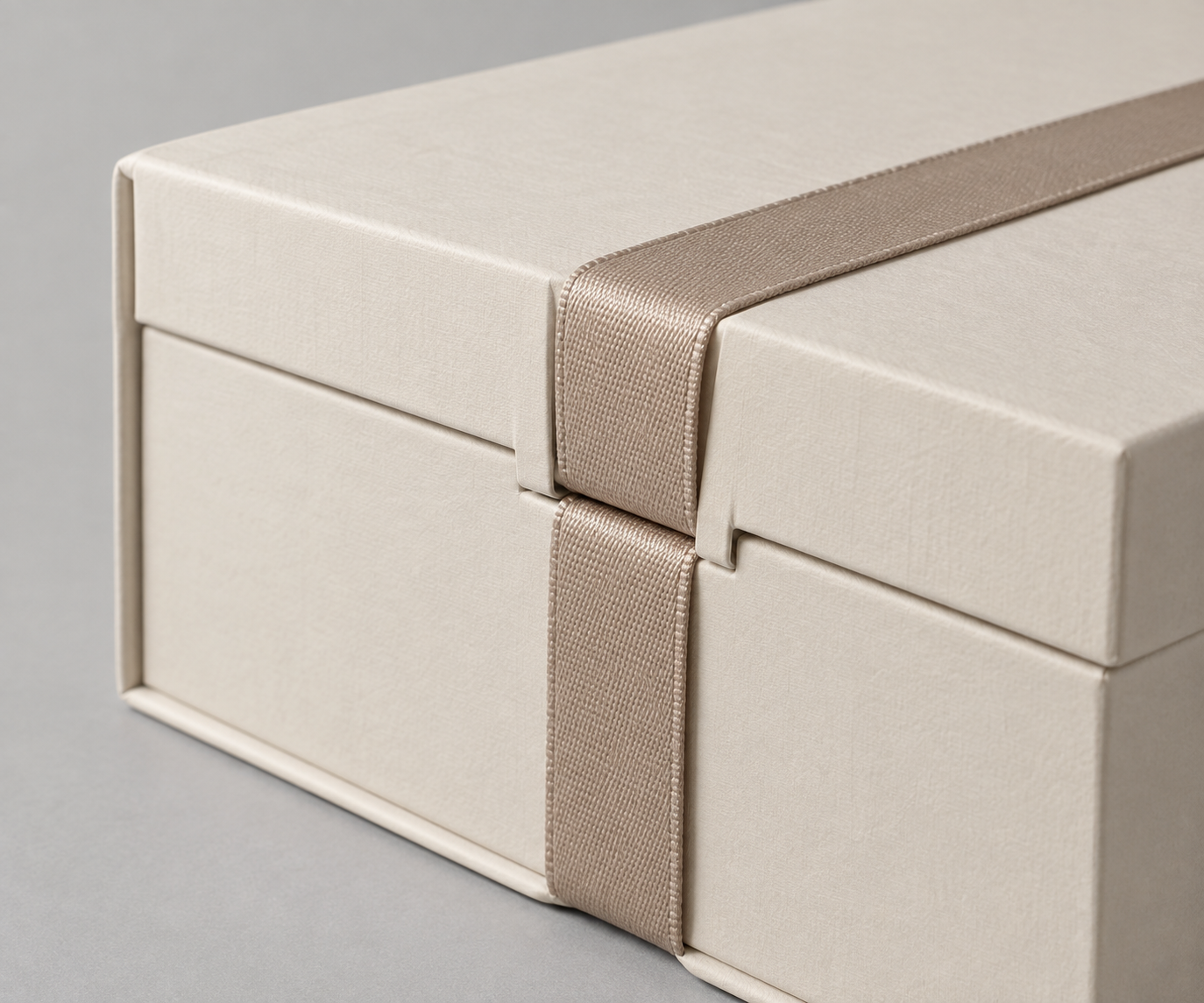
Attach the marked views to one project brief
Use the custom packaging quote brief template for shared product, artwork, quantity and packing inputs. Attach the three view IDs and open ribbon questions at the same revision. Keep the separate setup actions in the flat-pack setup record and supplier quotation scope in the quote comparison guide.
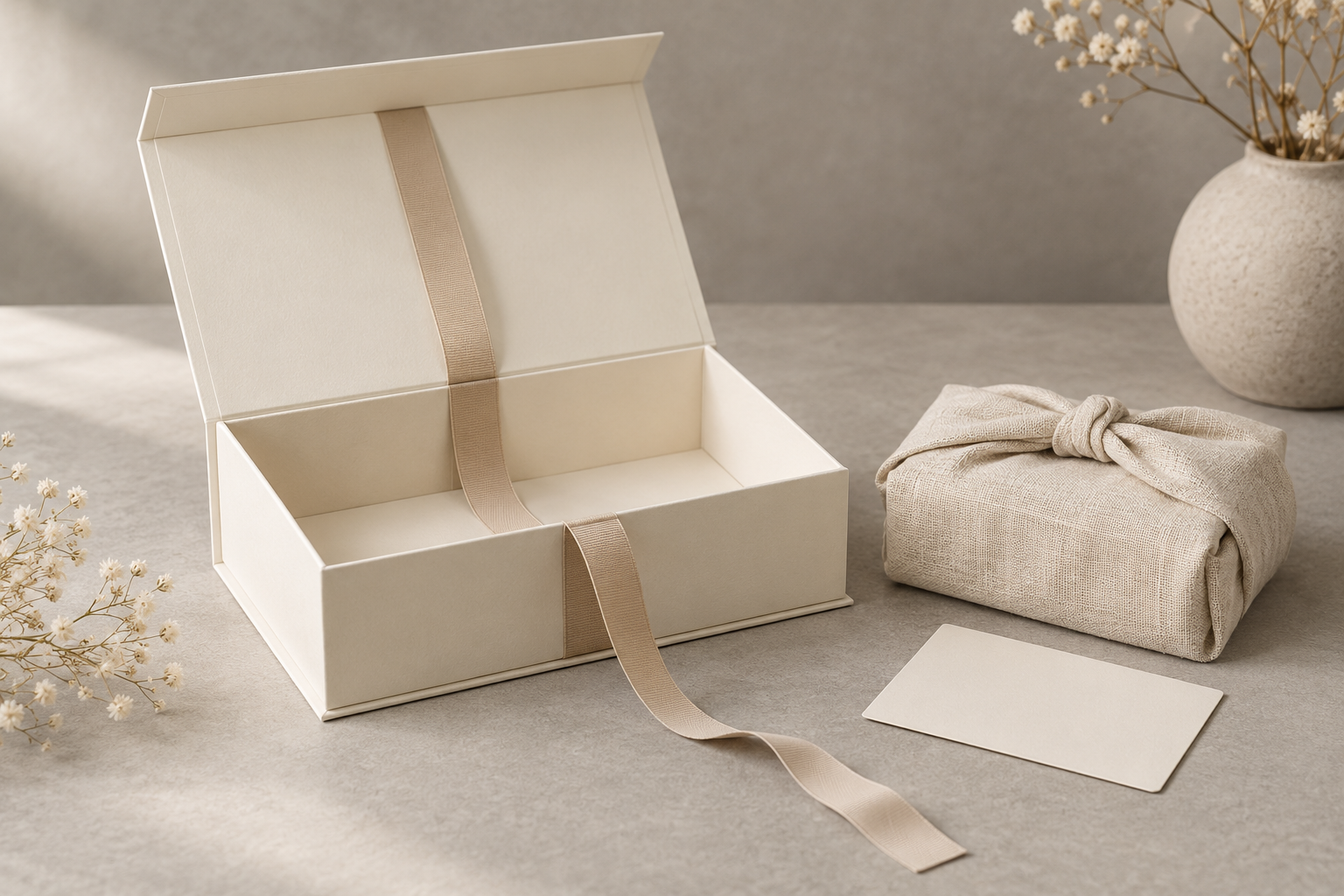
Use a sample to answer structural questions
Review the actual contents against the same three view IDs and record what the ribbon and hand actually do. If the proposal changes, identify the revised drawing instead of combining observations from different versions. Follow the packaging sample review guide for evidence and approval records; these drawings do not establish a technical outcome.
The related foldable gift-box project page gathers the same opening, visible-surface and ribbon-placement inputs. The folding gift-box category offers adjacent packaging directions when a buyer is still choosing a format.
Send the three-view ribbon review
Send the closed, first-opening and removal view IDs, their drawing revision and the open questions about hand movement, artwork obstruction and ribbon position. Attach the common project brief at the same revision. MUGE PACKAGING can review those inputs before a quotation or production decision is confirmed.
Source and scope: MUGE PACKAGING's folding gift-box category supports general discussion of dimensions, artwork, inserts and sampling. This guide does not confirm technical outcomes; Andy — Chief Designer & Project Manager is the project contact for a structure and sampling discussion, not the named author or reviewer of this article.