
Packaging sample review · Published May 21, 2026 · Updated September 28, 2026
How to Review a Packaging Sample Before Production
Check sample identity, product fit, assembly, artwork, finishing and approval records before releasing a custom packaging order.
Start with the approval scope, not a quick visual check
Before approving custom packaging, compare the sample with the actual packed product, the agreed drawing and the correct artwork revision. Record each result as approved, revise or pending. A photograph alone cannot establish usable dimensions, closure feel or transport performance.
This checklist is for a buyer who already has a sample of a folding carton, rigid box, paper tube, shopping bag or corrugated pack. It complements the project workflow; it is not a substitute for an agreed production inspection or a destination-market assessment.
1. Identify which sample you are reviewing
Write the sample identifier, supplier, received date, drawing revision and artwork revision on your review record. Ask what the sample is intended to prove.
An unprinted structural sample can help assess fit and opening, but it cannot approve the finished printing. A printed mock-up may demonstrate layout without reproducing the production board or finishing method. A production-intent sample should still have its material, process and exceptions confirmed in writing. Keep these approval scopes separate.
If a component differs from the intended production specification, mark that component pending rather than treating the whole pack as approved.
2. Check the complete packed product
Use the finished product with its cap, label, instructions, protective wrap and any accessories. Record the product's maximum outside dimensions and packed weight, then compare them with the agreed internal dimensions. Do not substitute the outside box dimensions for usable space.
Place the product into the sample in the intended orientation. Look for pressure on pumps, fragile edges, decorated surfaces or controls. Check whether an insert supports the intended areas and whether the product can be removed without tearing the pack or scraping its finish.
For a cylindrical product, a paper tube structure needs both side clearance and end clearance reviewed. For a rectangular product, a folding carton also needs its flaps, glue seam and accessory space considered. Agree project-specific tolerances; there is no universal clearance suitable for every product.
3. Inspect the opening and assembly sequence
Ask the person who will pack the product to assemble and close the sample. Note where the sequence is confusing, where excessive force is needed, or where a flap catches the product.
Check that the lid, drawer, tube cap or closure engages as intended. Inspect folds, corners, glue areas and wrapped edges after opening. For a shopping bag, review handle attachment and balance with the intended contents. Record the exact condition and number of repetitions used; casual handling is not a certified durability test.
Separate cosmetic issues from functional failures. A minor print mark and a closure that cannot retain the product need different decisions and corrective actions.
4. Review artwork, printing and finishing separately
Compare the sample with the approved artwork version, including product variant, text, barcode location, logo orientation and panel position. Check small text and line work at the intended viewing size.
For color, identify the agreed physical reference and viewing conditions. A screen image or a photograph taken under different lighting should not be the sole color approval reference.
Inspect foil registration, embossing alignment, coating boundaries, lamination edges and visible surface marks where those finishes are specified. Photograph each issue with a reference scale and identify the panel. State the required correction rather than writing only “color wrong” or “finish poor.”
If variable information or barcodes are present, arrange the agreed readability checks using the relevant equipment. Visual appearance alone does not prove scanner performance.
5. Keep handling observations separate from shipping qualification
Review the package with its intended outer carton, dividers and packing method where these form part of the project. Record movement, rubbing, unsupported areas and closure behavior.
Do not conclude that a pack is transport-safe simply because it looks undamaged on a table. Parcel, retail case and pallet shipment create different conditions. Agree the test method, sample quantity, acceptance criteria and responsibility before making a performance claim. Request the resulting evidence when testing is part of the specification.
6. Use a written approval record
For each checkpoint, record these fields:
- Reference: sample ID, drawing and artwork revision.
- Requirement: the agreed dimension, reference or functional outcome.
- Observation: a measurement, marked photograph or specific handling result.
- Decision: approved, revise or pending.
- Owner and next evidence: who will correct it and what must be supplied.
- Recheck: the replacement sample or document revision that closes the issue.
For example, “lid catches the product cap when opened” is a usable observation. Record the contact point and agreed clearance review; do not invent a new dimension without checking the product and structure together.
An approval may cover structure while print remains pending. Make that limitation explicit. Keep the approved reference and revision record accessible to both teams, and agree when a changed material, drawing or artwork requires another review.
7. Close the loop before production release
Send one consolidated revision list instead of scattered messages. Check that the next sample or written response addresses each open item. Record who has authority to release the order and which version is approved.
A sample review can identify issues before production; it does not replace production quality control or guarantee every unit. Keep sample approval, order specification and inspection requirements connected.
Send a sample-review brief
MUGE PACKAGING can review your packaging direction from the product dimensions, intended structure, material and finishing requirements. Send your sample comments and project details, including the quantity, destination market, artwork status and photographs of the specific issue. Pricing, timing and any test requirements need project confirmation.
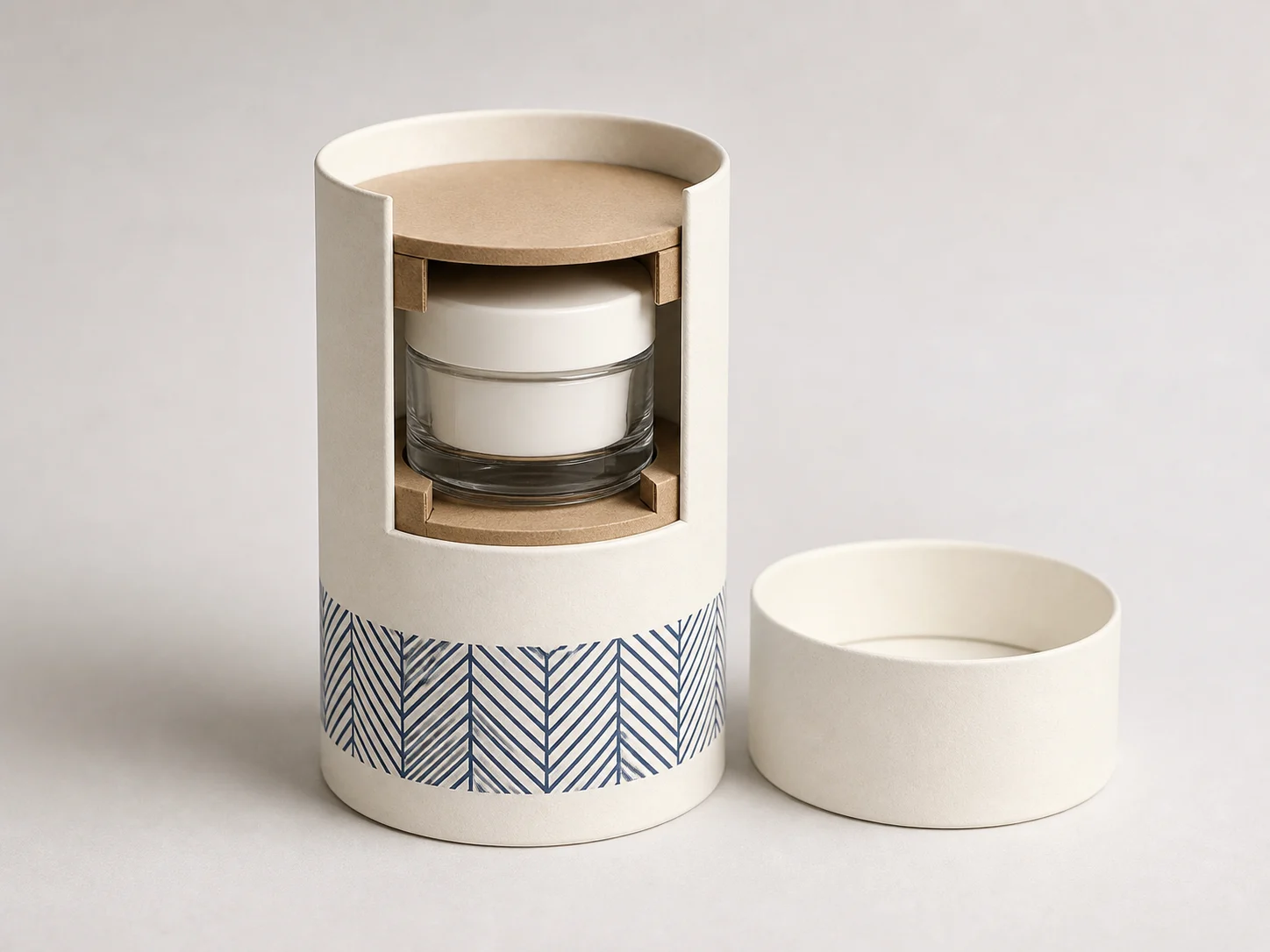
Originally published May 21, 2026. Content reviewed and expanded September 3, 2026. The illustration is an AI-generated packaging concept, not evidence of a tested sample or customer project.
Free buyer worksheet · Version 1 · September 28, 2026
Keep sample decisions and revisions in one record
Use this blank CSV to track the sample, specification revision, observations, requested changes and recheck evidence. It includes 18 optional checkpoints and opens in a spreadsheet.
Download the sample approval & revision log (CSV)- Save a project copy and identify the sample, drawing and artwork revision.
- Agree the review method and acceptance criteria before recording actual observations.
- Record each decision, its scope, the revision owner and the supporting evidence.
- Link the next sample to the original record and retain unresolved or failed observations.
AI-assisted generic blank template, not a customer record, test report or certification. Blank fields do not mean approval. Keep completed project copies private; no email is required to download this file.