
Record the quoted unit in an A/B worksheet
Put the buyer's requested unit in the Required basis column. Record Supplier A's wording and Supplier B's wording independently, using their response references. Mark an unanswered cell “Open”; a blank is neither included nor approved. The final column records the clarification needed before an amount comparison.
| Comparison field | Required basis | Supplier A: stated unit | Supplier B: stated unit | Clarify before comparison |
|---|---|---|---|---|
| Quoted unit label | Write what the requested quotation unit means. | Open: record Supplier A's stated unit | Open: record Supplier B's stated unit | Does each reply state shell, separate component, complete set or another explicit basis? |
| Parts within one unit | Identify the parts and number of each part in that unit. | Open: record Supplier A's stated unit | Open: record Supplier B's stated unit | Is a shown ribbon or insert included, separately quoted, excluded or unanswered? |
| Units for one requested set | Record how the supplier's unit relates to the buyer's requested set. | Open: record Supplier A's stated unit | Open: record Supplier B's stated unit | Can the stated unit make the requested set without an unquoted component? |
| Quantity denominator | Retain the requested order quantity by size and artwork revision. | Open: record Supplier A's stated unit | Open: record Supplier B's stated unit | Is the amount per part, per set, per stated group or for the whole order? |
| Separate component lines | Keep each separately quoted component linked to the same set reference. | Open: record Supplier A's stated unit | Open: record Supplier B's stated unit | Are counts and inclusions explicit, or would combining the lines hide an unanswered scope? |
| Alternative or unresolved basis | Label an alternative separately; keep an unanswered basis open. | Open: record Supplier A's stated unit | Open: record Supplier B's stated unit | Should this reply be clarified before comparison rather than treated as a lower amount? |
If the unit or its component count is unanswered, mark the reply not yet comparable. Request the buyer's chosen basis or retain a clearly labelled alternative. Do not fill an empty component line with an assumed inclusion or calculate an apparent saving from differently defined units.
Distinguish a shell, a component and a complete set
For this worksheet, “shell” means the box body the response explicitly identifies. “Separate component” means a named part on its own quotation line. “Complete set” means the collection of parts the buyer has specified for one set. These are comparison labels, not standard supplier definitions: ask the supplier to confirm the contents and count behind its wording.
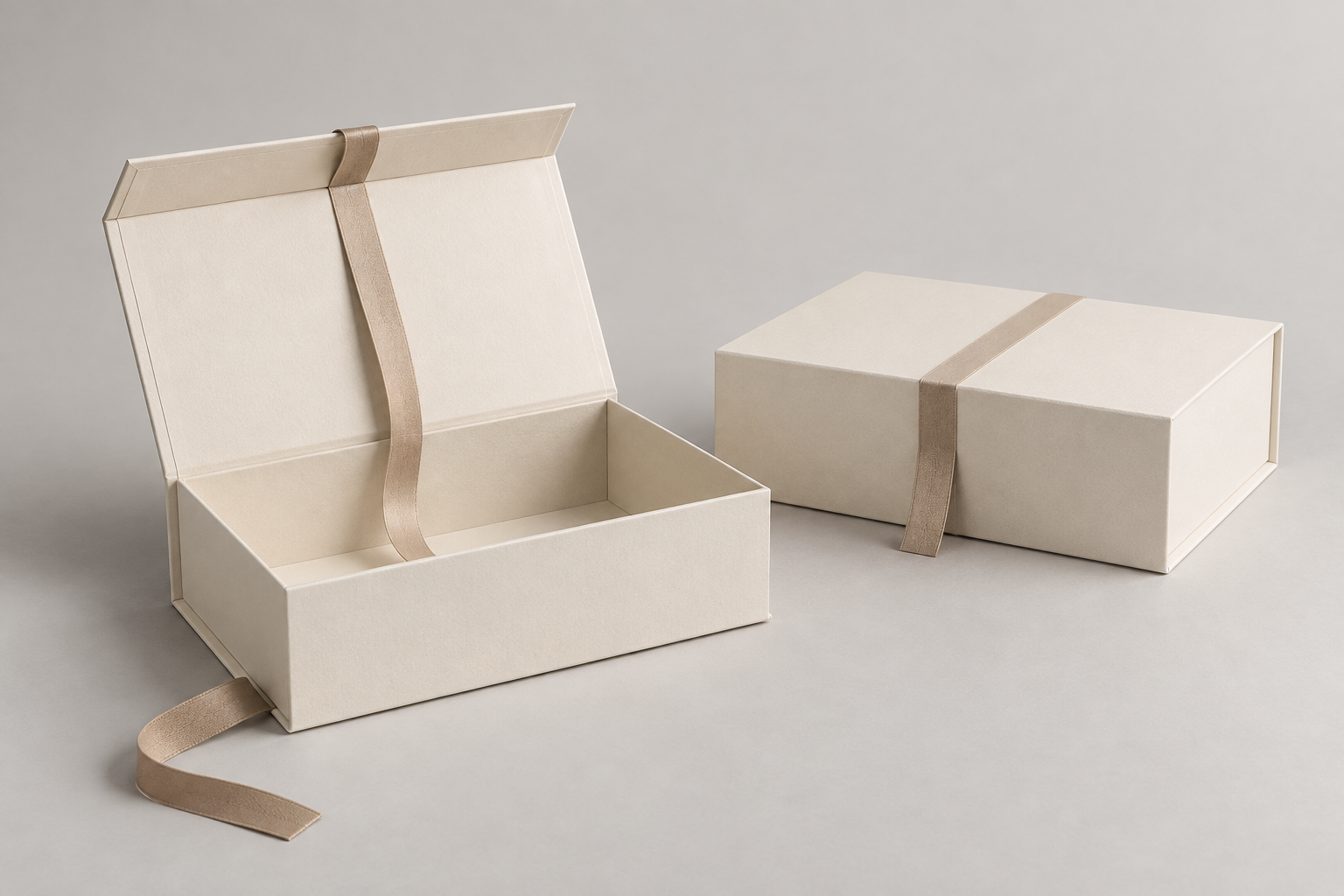
A photograph or rendering cannot confirm that the ribbon, insert or loose accessory shown beside a box is included. If a response uses “box”, “piece”, “pack” or “set” without a definition, quote that wording in its own column and leave the basis open. Do not translate it into the buyer's requested set before the supplier answers.
Use an A/B mismatch to frame the clarification
Hypothetical example: the buyer requests a shell with a separately identifiable ribbon and insert. Supplier A labels its unit “shell”, with the ribbon and insert unanswered. Supplier B labels its unit “complete set” and names all three parts. Record both statements as written. A's shell amount and B's set amount are not yet on the same unit basis; neither reply establishes which option is preferable.
Ask A whether it can answer for the requested set, identifying any separate component lines. Ask B to confirm each included part and count. Keep an unanswered reply open and an alternative clearly labelled. This example supplies no actual supplier response, price, MOQ, production method or performance result.

Keep the quantity denominator attached to each unit
Record the requested order quantity for each size and artwork revision separately from the supplier's quoted quantity. Ask whether an amount is per component, per defined set, per stated group or for the whole order. An annual forecast and a first-order quantity are different inputs; retain their labels rather than swapping one for the other during the comparison.
When components have separate quotation lines, link them to the same requested-set reference and record the count of each part. If the mapping is unclear, keep the units-for-one-set row open. Do not combine incomplete lines into a presumed set total. Once the definitions are confirmed, retain the response references so the unit basis can be checked again when a supplier changes a line.

Retain the shared brief while checking the unit
Keep component specifications, supplied state, artwork, packing and shipment scope on the existing controlled RFQ template. Confirm that both replies refer to that same brief. A matched quotation unit alone does not establish equal specifications or delivery scope.
Use the flat-pack setup guide for measurement states and numbered assembly questions, and the ribbon-placement guide for opening views. This worksheet only records how a quotation unit maps to the requested set; it does not replace either design task or actual sample approval.
Send the unit mismatch for project review
Share the requested-set reference, both stated units, included and unresolved component counts, the quantity denominator and each response reference. Mark the exact row needing clarification. MUGE PACKAGING can review those project inputs before quotation or sampling is confirmed.
Source and scope: MUGE PACKAGING's folding gift-box category supports general project review. The quoted-unit worksheet is a proposed buyer comparison method, not evidence of manufacturing, test results, savings or agreed commercial terms. Andy — Chief Designer & Project Manager is the project contact for a structure and sampling discussion, not a claimed reviewer.