
Start with the bomb, not the box
Build the brief around the real product. Hand-pressed bombs vary by a few millimetres from batch to batch, and a drawing will not show that. Before you brief any supplier, record:
- Widest diameter of the bomb, measured in two directions, and its height if the base is flattened or the shape is a half-sphere or a heart.
- Weight of one bomb, and of the full set.
- Wrapped size. If each bomb is film-wrapped before boxing, measure it wrapped. The film, shrink seam and any tail all add to the size.
- Variation. Measure several bombs from one batch and note the smallest and largest.
Send physical samples if you can.
Match the structure to the set
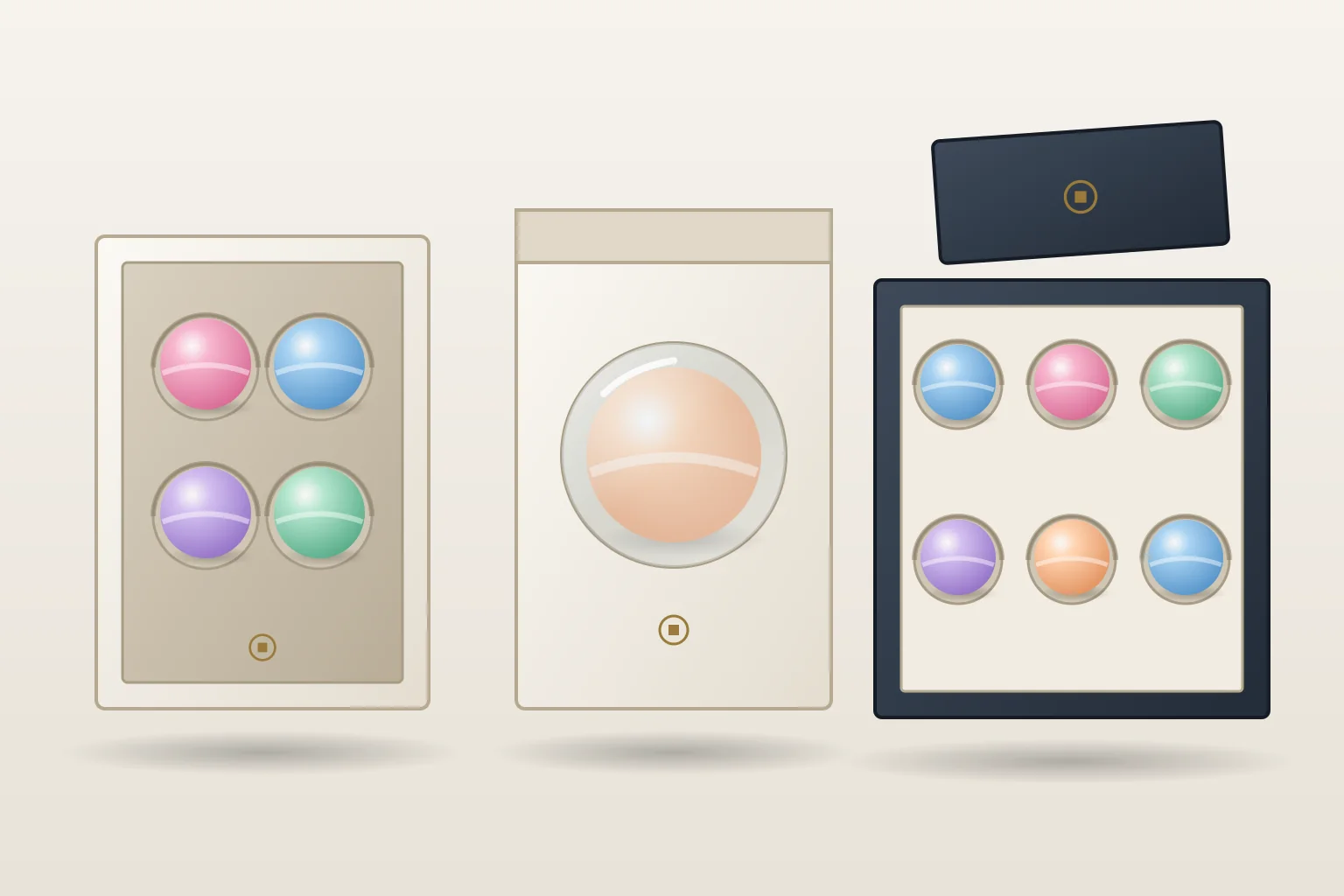
| Set situation | Structure to consider | What to watch |
|---|---|---|
| One bomb for retail | Folding carton, tuck end, with or without a window | Window size against the bomb; whether the bomb sits upright or lies flat |
| Two to six bombs in a set | Folding carton with a folded paperboard insert or partition holding round cavities | Spacing between cavities and the gap to the carton wall |
| Premium gift set | Two-piece rigid box with a recessed paperboard tray | Tray depth, lid clearance and how the set is lifted out |
| Product that should be seen on a shelf | Carton with a clear PET window patch, or a PVC/PET clear box | Window position against the colours; how scuffs on the patch will look |
| Shipping several sets | A retail carton inside a separate corrugated outer box | Do not use the retail box as the shipping carton |
Our paperboard folding carton with a folded insert page shows the insert approach for lighter sets. For a single bomb that should be visible, the cosmetic folding carton with window patch shows the window structure we review first.
Sizing the cavity around a sphere
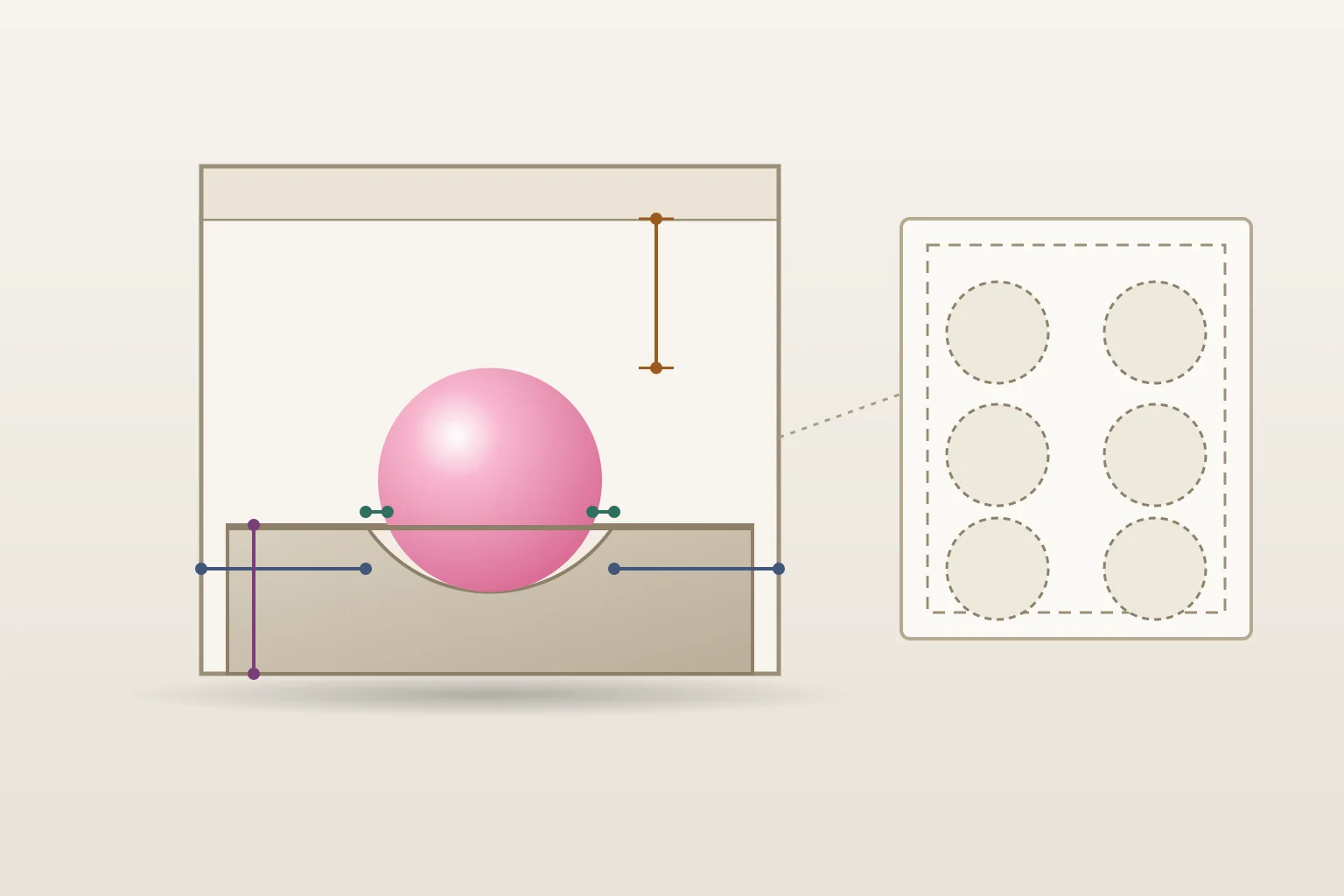
A sphere touches its support at one point, so the cavity has to cradle it instead of boxing it in.
- Diameter. The cavity should be a little larger than the widest bomb, not equal to it. Too tight and a larger bomb will not seat; too loose and it rolls. Agree the allowance on a sample, not on paper.
- Depth. A good cavity holds the lower part of the bomb so it cannot roll out when the box is tilted. How much of the bomb stands above the tray decides the lid clearance.
- Spacing. Leave board between cavities. If two bombs touch, colour and fragrance can transfer, and a knock will chip both.
- Wall gap. The distance from the outer cavities to the carton wall affects how well the set is held. Ask how the design restrains the bombs from every side.
- Lid clearance. The lid must close without pressing on the highest point of the bomb. Include the board thickness of the lid itself.
Placing a window
A window sells the product, so decide what the buyer should see.
- Place the window over the most attractive part of the bomb, then check it against the real colours.
- Keep the opening smaller than the visible face of the bomb, so the clear patch has a margin of board to bond to.
- Ask how long the carton will sit under shop lighting, and review how a scuffed patch looks on an older sample.
A closed carton with a printed image is a valid choice too.
Oils, fragrance and moisture
Bath bombs are sensitive to moisture, and some contain oils or strong fragrance. Many brands film-wrap each bomb before boxing. Treat the carton as a retail and display pack, and do not assume paperboard is a moisture barrier.
If your bombs are oily or strongly scented, say so in the brief. Pack a sample with the real wrapped product and check it after a few days for marks on the paperboard, the insert and the window patch before you approve artwork. Keep any claim about moisture protection or shelf life with whoever wraps and fills the product.
Please also share your target market and any labelling you must print, such as net weight, ingredients or warnings. We review those requirements before confirming the structure.
Common mistakes
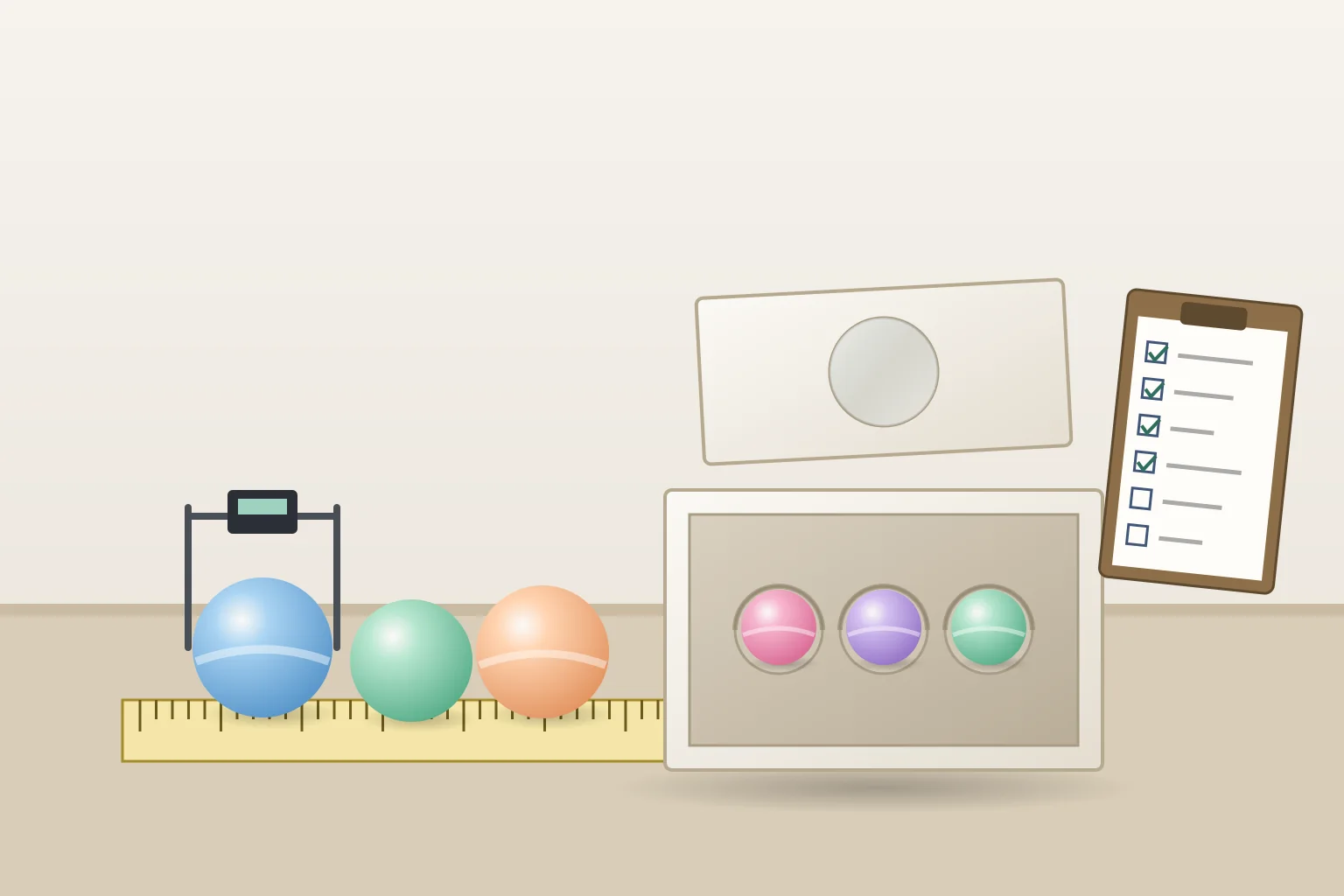
- Sizing the carton to one perfect bomb, then finding batch variation does not fit the cavity.
- Measuring unwrapped bombs when the product ships in film.
- Making the cavity too shallow, so the bomb rolls out when the box is tilted.
- Cutting the window across a colour band that looks different after the bombs are pressed.
- Approving artwork before a packed sample has been checked.
Buyer checklist for a quote
| Field | What to send | Why it matters |
|---|---|---|
| Bomb size | Widest diameter, height and weight of several real bombs | Cavities are cut to real items |
| Wrapping | Film type, seam position and wrapped size | Changes the cavity and window size |
| Set layout | Number of bombs, and any card or accessory in the set | Defines the insert and the box |
| Structure | Folding carton, rigid box or clear box, and closure | Keeps every quote on the same structure |
| Window | Yes or no, shape and position over the bomb | Changes the die line and the patch material |
| Print and finish | Colours, coverage, matte or gloss, any foil | Separates print and finishing steps |
| Labelling | Target market and the text you must print | Reserves space on the carton |
| Quantity | Quantity per set type and per size | Each set is reviewed separately |
What to check on the first sample
Pack the sample with real, wrapped bombs and close it as a packer would. Shake it and tilt it in every direction. Check that the lid closes without touching the product, that the window shows the right area, that bombs lift out without chipping, and that the paperboard, insert and patch are clean after a few days.
Frequently asked questions
- Can one box hold bombs of different sizes?
- Only if the largest bomb seats properly and the smallest is still held. In most cases each size needs its own insert, so review every size on a sample.
- Do I need a window?
- Not always. A window helps when colour or shape sells the product. A closed carton suits sets where a printed image or finish does that job and you want to keep the product surface out of view.
Send your bath bomb details for review
If you are planning custom bath bomb boxes, send the bomb sizes and weights, the set layout, artwork or references and the quantity per set type through our contact page. We will review the carton, insert and window direction with you and agree what the first sample needs to prove before quotation. You can also compare structures on our cosmetic packaging page.