
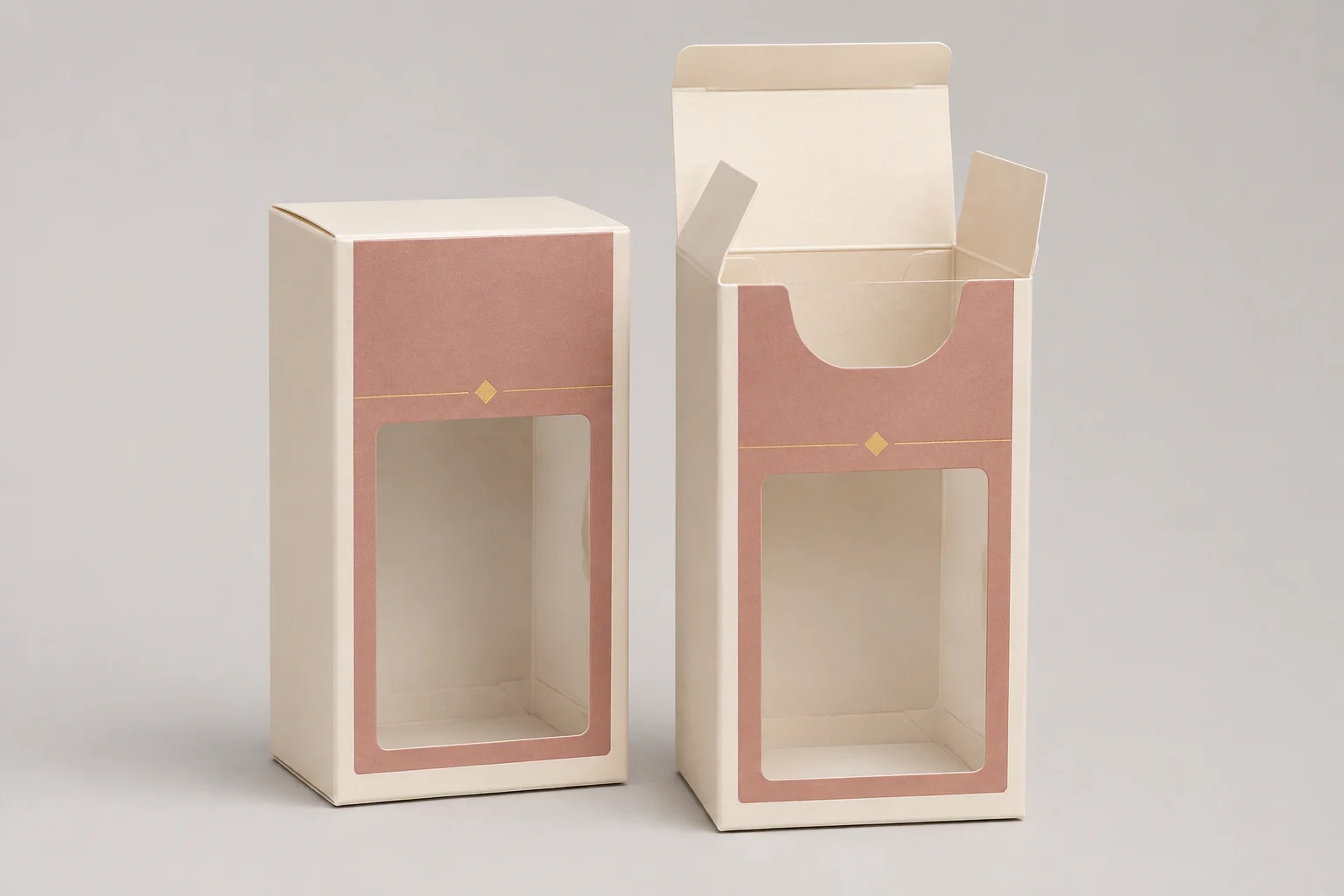
MUGE PACKAGING design-direction concept, not a customer project, factory photograph or production sample. These are separate concept variants, not successive views of one physical sample. Window position, base construction, board, patch material, fit and performance require project review and sampling.
Cosmetic folding-carton direction
Custom Cosmetic Folding Carton With Window Patch
A die-cut display window can help a buyer see a packed product, but its position must be reviewed with the product envelope, paperboard folds, print layout and packing method. This page is for paperboard cartons and transparent window patches only; it does not claim thermoformed packaging capability.
Request structure reviewThree concept views, one review boundary
MUGE PACKAGING design-direction concept, not a customer project, factory photograph or production sample. These are separate concept variants, not successive views of one physical sample. Window position, base construction, board, patch material, fit and performance require project review and sampling.
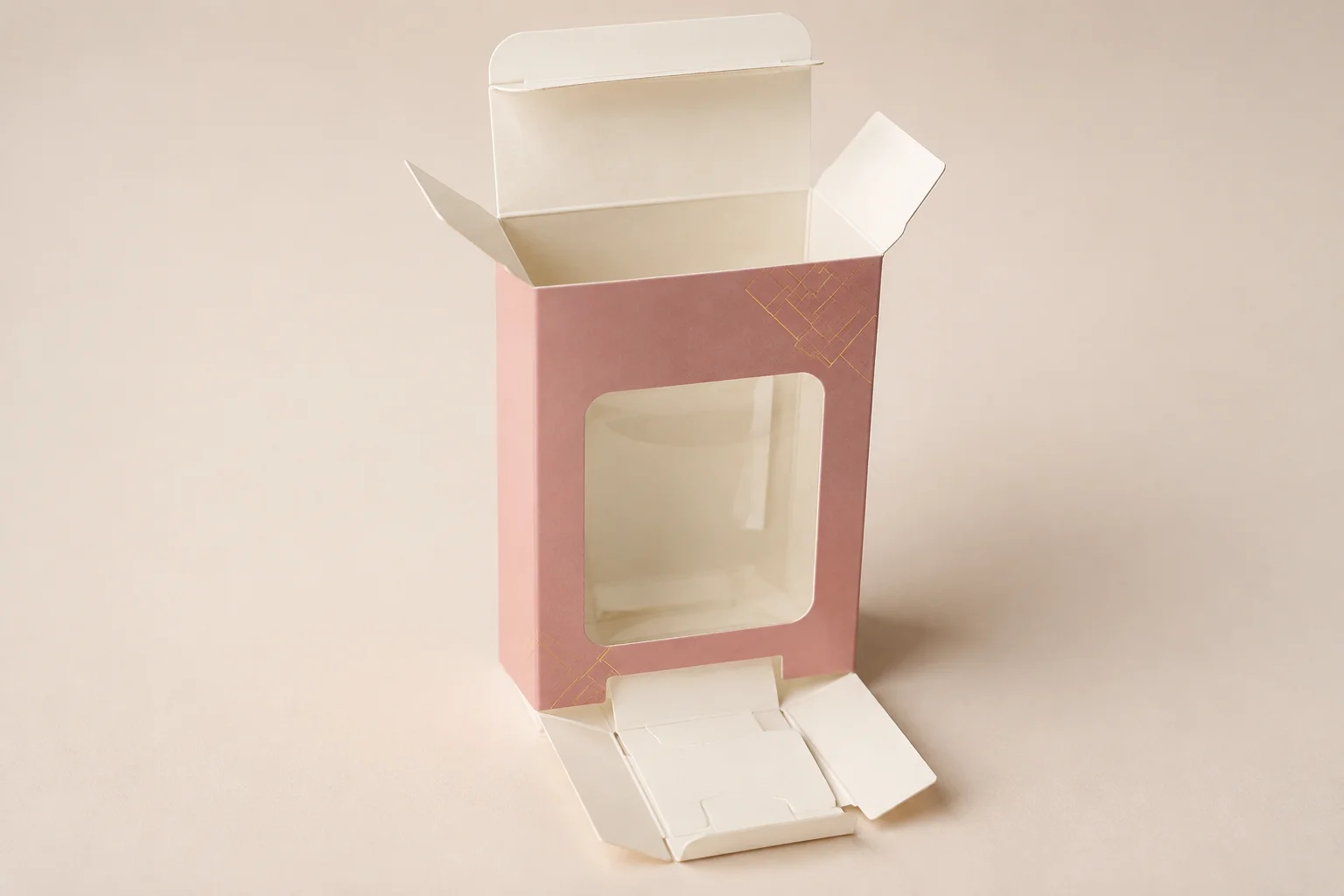
MUGE PACKAGING design-direction concept, not a customer project, factory photograph or production sample. These are separate concept variants, not successive views of one physical sample. Window position, base construction, board, patch material, fit and performance require project review and sampling.
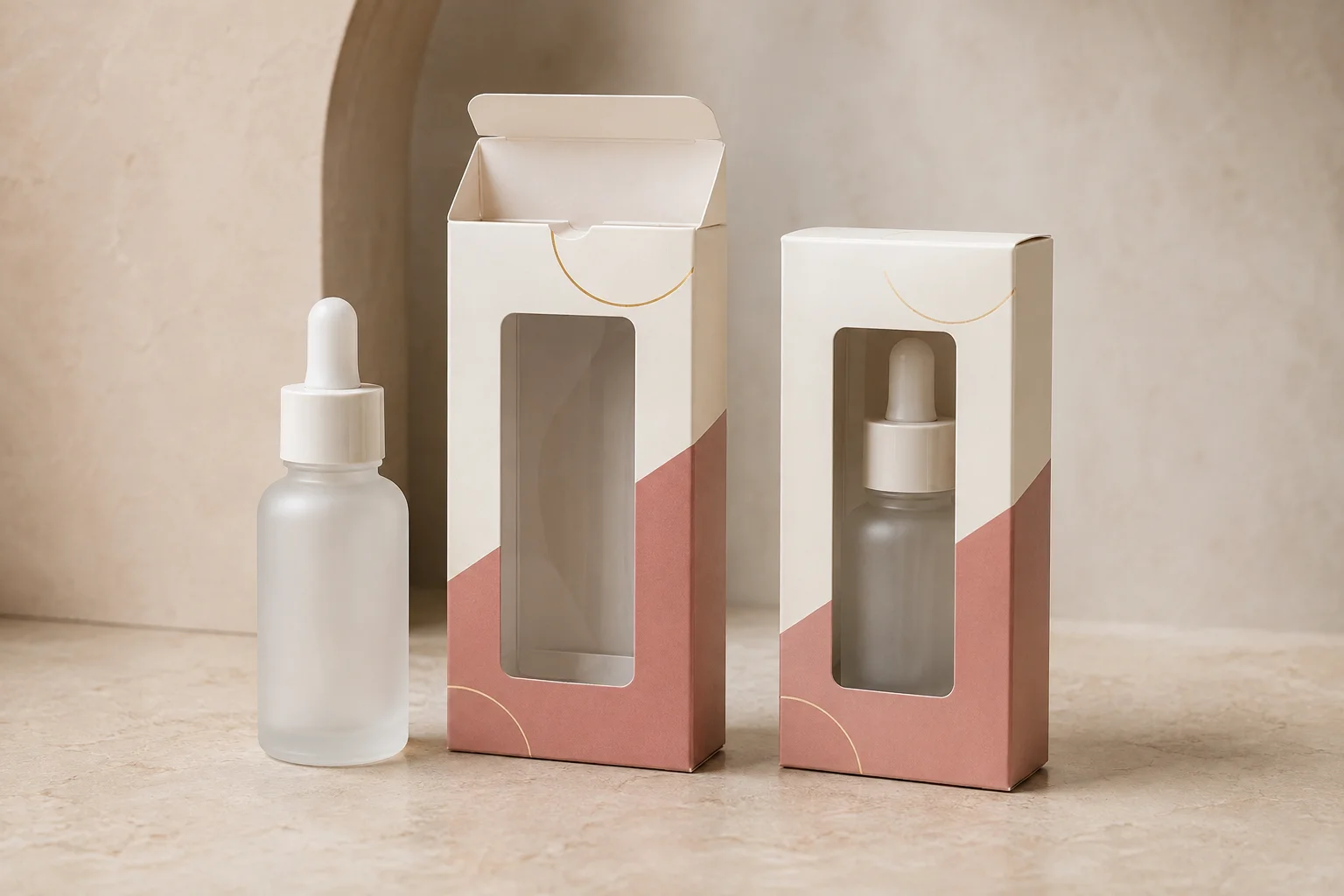
MUGE PACKAGING design-direction concept, not a customer project, factory photograph or production sample. These are separate concept variants, not successive views of one physical sample. Window position, base construction, board, patch material, fit and performance require project review and sampling.
Structure, material and decoration decisions
Use this direction for a single cosmetic item in secondary paperboard packaging when a selected product feature should be visible. The pictured bottle is illustrative; the carton is not a liquid container and its window does not establish retention or transport performance.
- Carton structure
- Review tuck closure, loading direction, seam, base and the aperture on the same drawing. The partly unfolded concept is not a validated cutting or folding pattern.
- Board and patch
- White card or coated-paper direction requires grade review. Identify the transparent patch material separately; no film thickness, adhesive specification or fixed tolerance is confirmed by these images.
- Supply CMYK or spot-colour references, artwork panels and a clearly marked window boundary. Ask for the patch attachment area to be shown separately from the visible aperture.
- Surface finish
- Mark any foil, spot UV or lamination request by panel. Review the finish boundary against the opening and folds before sampling.
- Insert and packing
- State whether a paperboard insert is requested to locate the item. Its geometry, assembly, loading access and outer packing need separate review; a window patch is not a bottle support.
Quote-ready review inputs
- Finished product width, depth, height and loading orientation
- Display-side and exact window position relative to the product
- Internal versus external dimensions and usable clearance
- Board direction, artwork coverage, print colours and finish locations
- Transparent patch material direction, glue area and visible-edge expectation
- Product weight, quantity direction, destination market, inner/master packing and sample checks
Use the paired guide for window placement
Read the cosmetic folding-carton window fit guide before requesting a quote. For broader cosmetic structures and finish directions, see cosmetic packaging. For the paperboard direction, consult the first-party white-card material information. These MUGE descriptions support the product category only. A concept image cannot establish final dimensions, protection, compliance or production approval.
Send carton details