
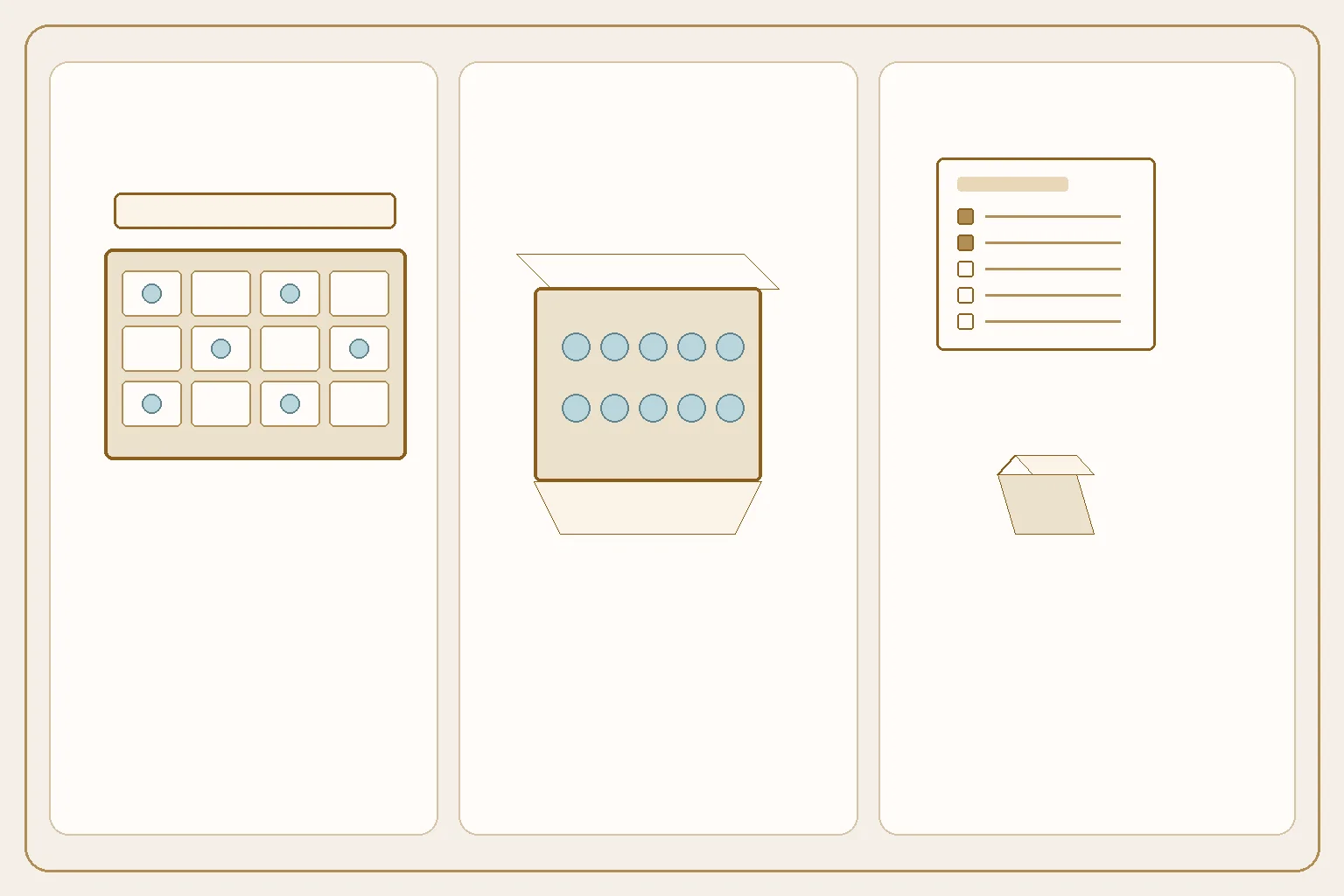
What the RFQ has to name
A render that only says “24-day calendar” does not fix the dieline. Name the cavity count, the largest piece in each pocket, tray function, lid, board, print and the quantity for that one design.
Measure each finished piece with the method in the product dimensions RFQ guide. Paste the same numbers into the custom packaging quote brief so a second review is not guessing from a different photo.
Cavity count
Cavity count is the number of pockets the tray must form. Twelve, twenty-four and any other count are project choices, not a pre-tooled catalogue size.
Put the count in the RFQ. A 12-pocket calendar and a 24-pocket calendar do not share a tray, and the outer size usually changes with the count. Each count is its own design. A new artwork file is also its own design.
For every cavity, record the largest item, which face is up, and which face should stay visible if you ask for a window. A mixed set is still one design when it shares one dieline, one tray and one artwork. A second outer size or a second tray layout is a second design, with its own quantity.
Tray and insert
The tray keeps each piece in place and keeps load order through packing and transit. Structures that match this brief are:
- A folded paperboard cavity tray in a rigid base
- A die-cut paperboard insert inside a folding carton
- A platform tray for several small pieces plus one taller piece
Say what the tray must do before you send a drawing: stop pieces swapping places, keep a row readable, or separate a taller piece from shorter ones. Do not ask the factory to invent a gap from a render. Fit is checked on a physical sample.
How to size a cavity
- Measure the finished item that will be packed, including any band, wrap or cap that ships inside the pocket.
- Use one unit system. Millimetres are the clearest default.
- Mark each number as measured or nominal. A catalogue diameter is not a caliper reading.
- If several items share one cavity size, size that pocket to the largest envelope and name the items that share it.
- Note anything that must not be crushed, such as a dome or a bow. A clearance is not proven until the sample is packed.
A window is optional. Name the face that must stay visible and anything that must not touch the film. Leave film specification and fit to the sample.
Lid structure
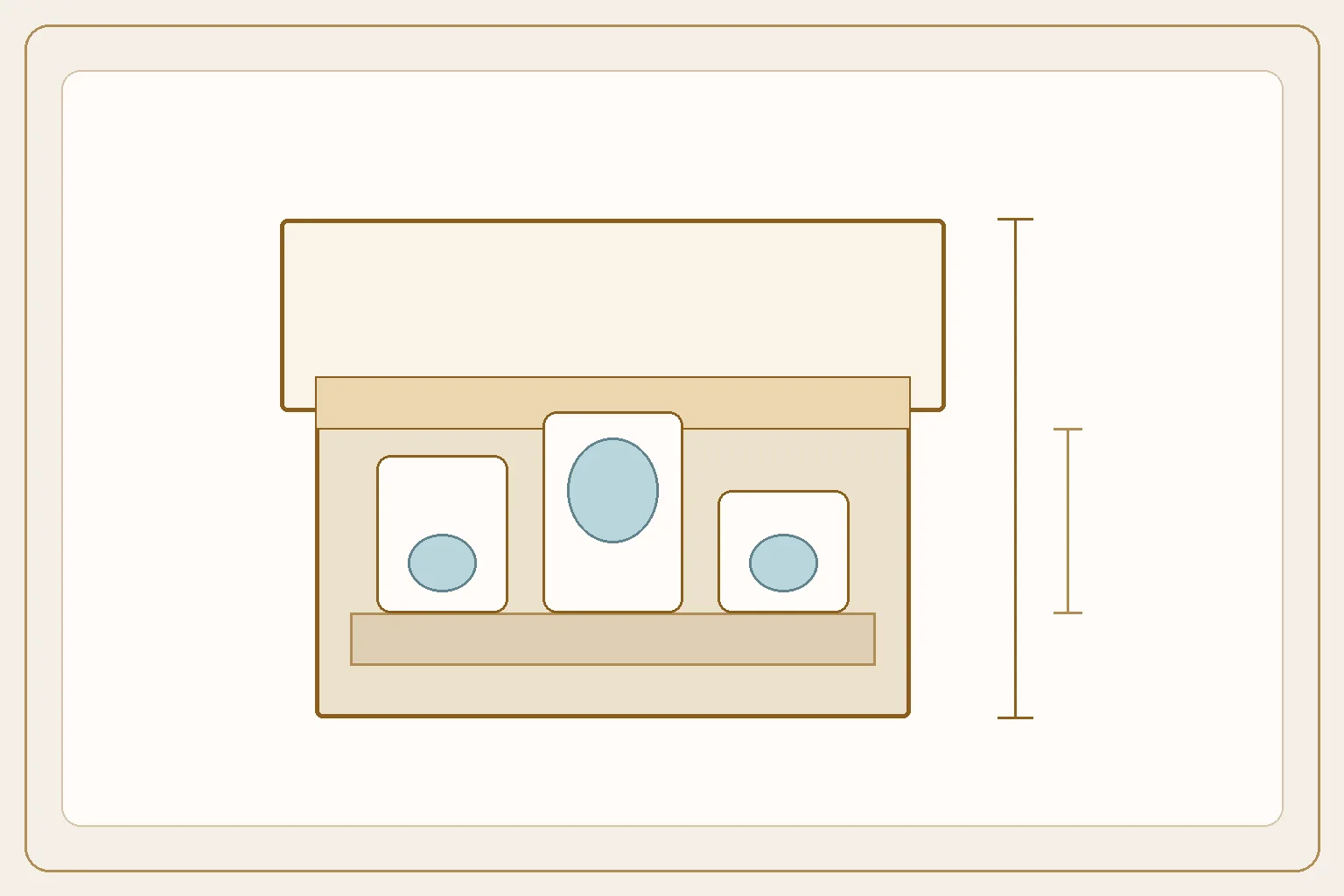
Pick the outer that matches how the calendar opens and how it ships.
Rigid lid and base
A two-piece rigid gift box uses a separate lid and a base. The base holds the tray. State the lid depth. Usable height is not the outside height: lid overlap and the tray floor both consume space. Ask for net internal height as well as outer length, width and height.
Magnetic rigid lid
Magnetic closure is part of the rigid gift-box line. Say whether the lid is a separate cover or a hinged book-style lid, and which panel carries the art. The magnet does not replace a measured cavity height.
Folding carton plus a cavity tray
Use a folding carton when the project does not need a wrapped rigid lid. Name the closure, such as a tuck end. A corrugated mailer is a separate shipping line around the calendar, not the calendar itself.
Rigid outer options are on the rigid boxes page. Folding cartons and the wider paper range are on the paper packaging page.
Board, print and finish
Name the board family. “Premium” is not a board grade.
- Rigid outer: wrapped chipboard for the lid and base, plus the wrap paper. FSC-certified paper available via a certified supplier.
- Folding outer: carton board, named separately from the tray board when they differ.
- Tray: paperboard formed into cavities. State whether it matches the base or reads as a separate insert.
Print and finish sit on the same design: where the art sits (wrap, carton, or both), how many colours, and varnish, foil or emboss only if you want that effect quoted. Die-cut / plate cost is included in the unit price. Changing the artwork or the size starts a new design.
RFQ checklist
| Field | What to write |
|---|---|
| Cavity count | The number of pockets you will pack |
| Item per cavity | Largest finished size, orientation and unit |
| Same or mixed pockets | One size, or which cavities differ |
| Tray or insert | Function first, then the geometry you have |
| Lid | Lift-off rigid, magnetic rigid, or folding carton |
| Usable internal height | After lid overlap and tray floor |
| Outer size | Target length × width × height, or “size to the tray” |
| Board | Rigid wrap and chipboard, folding carton board, tray board |
| Print and finish | Colours, and varnish, foil or emboss if you want them quoted |
| Window | None, or the visible face and what must clear the film |
| Quantity per design | One design per line; see MOQ below |
| Shipper | Whether a corrugated mailer is a separate line |
What to check on the first sample
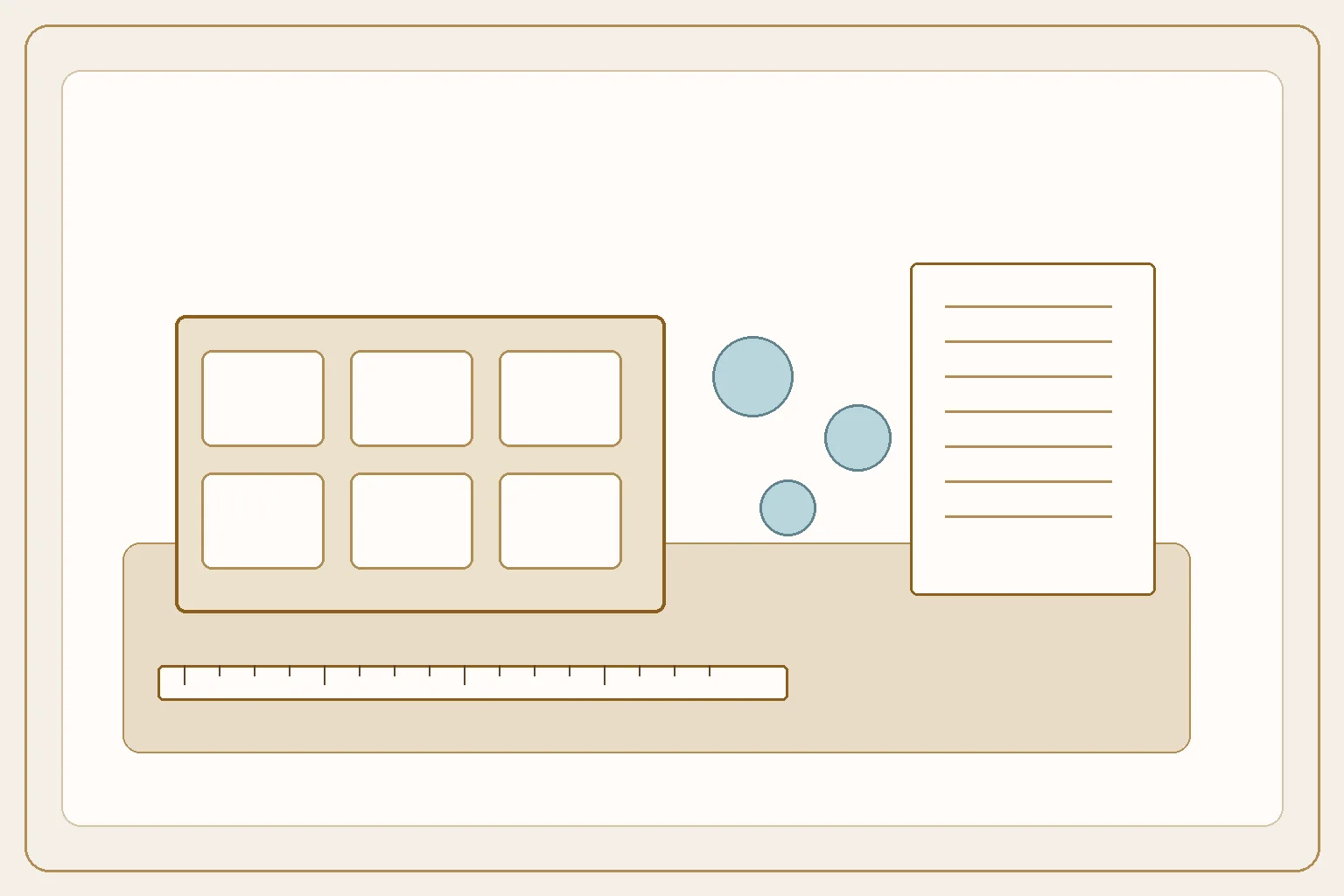
Pack the real pieces. Each pocket should accept its piece without forcing the board, the lid should close on the tallest piece you listed, and the tray should stay seated or lift out as the brief asked. Artwork should sit on the panels you marked. Send written corrections before bulk. A changed cavity size or a changed outer size is a new design.
MOQ, sampling and lead time
Per MUGE commercial defaults, and always subject to the formal quote:
- MOQ 500 pieces per design. New artwork or a new size is a new design; designs cannot be combined to meet MOQ.
- Sampling typically 3–7 working days, subject to quote confirmation.
- Bulk typically 12–25 working days, subject to quote confirmation.
- Die-cut / plate cost is included in the unit price.
No fixed unit prices, discounts or payment terms are published here.
Frequently asked questions
- Can a 12-cavity calendar and a 24-cavity calendar share one MOQ?
- No. A different cavity count changes the tray and usually the outer size. That is a new size, so it is a new design. Designs cannot be combined to meet the 500-piece minimum.
- Do I need every piece measured before the first quote?
- Send the largest finished size for each cavity size, and mark anything still open. A preliminary review can start when the unknowns are written down. Sampling is where fit is confirmed. Bulk production should wait until the critical dimensions are stable.
Send the advent calendar specification
Send cavity count, tray function, lid structure, board and quantity per design for a project review through the quote calculator or contact. Include the measured piece sizes so the first sample is cut for the pockets you will actually fill.