
Finished bottle envelope
Maximum height, body diameter or L × W, base, shoulder, neck and closure geometry
Defines the controlled clearance and insert cavity; nominal bottle volume is not enough.
Custom bottle presentation packaging
A book-style rigid box can create a controlled gift opening for wine and spirits, but it should be quoted from the finished bottle—not a capacity label or a reference image. MUGE reviews bottle geometry, insert contact, opening behavior, surface finish and distribution pack-out before a project-specific sample is approved.
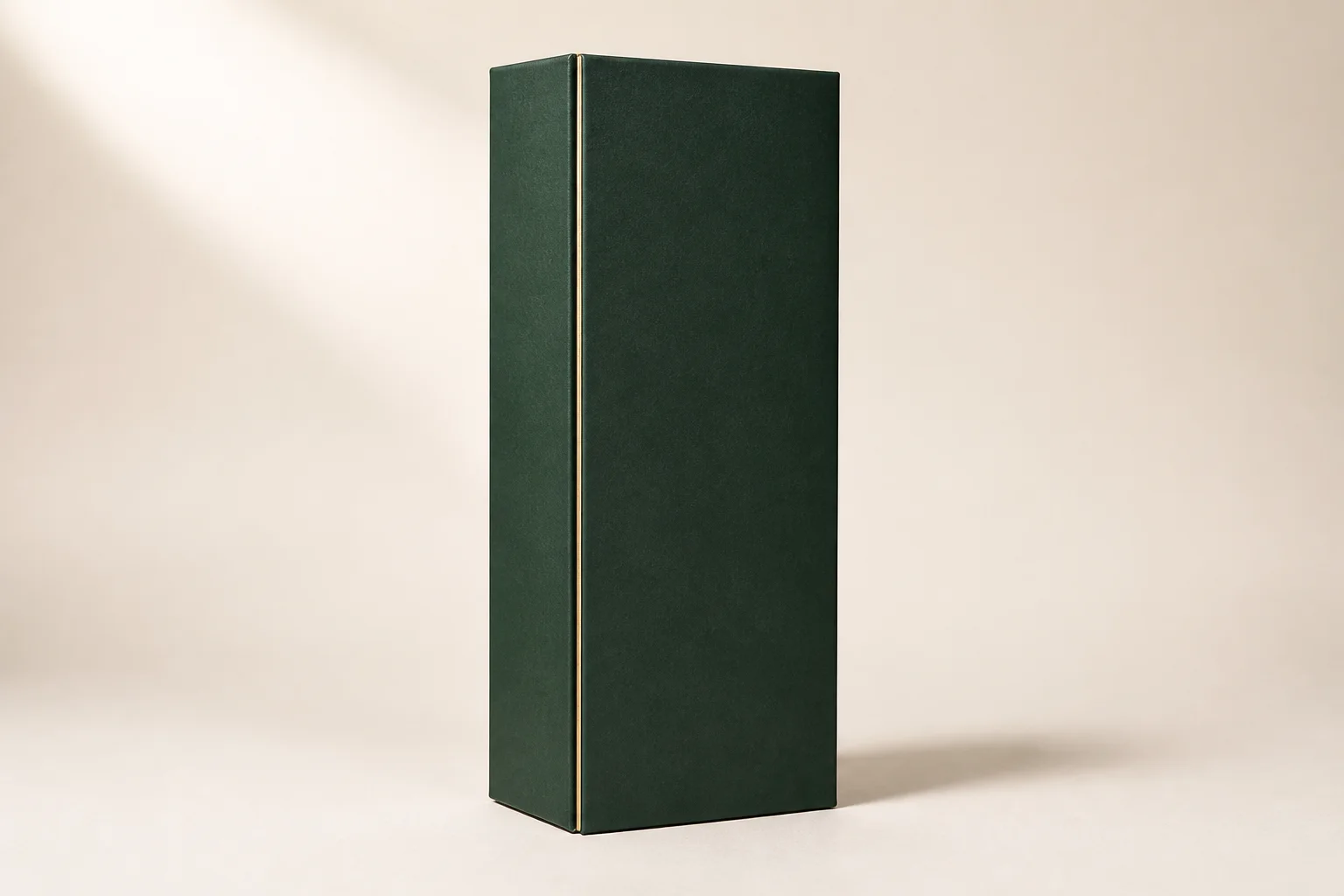
Three-view design review
These images show a related concept direction: closed presentation, open box and insert access. They are design illustrations, not evidence that a particular bottle, insert material, clearance or test has been approved.
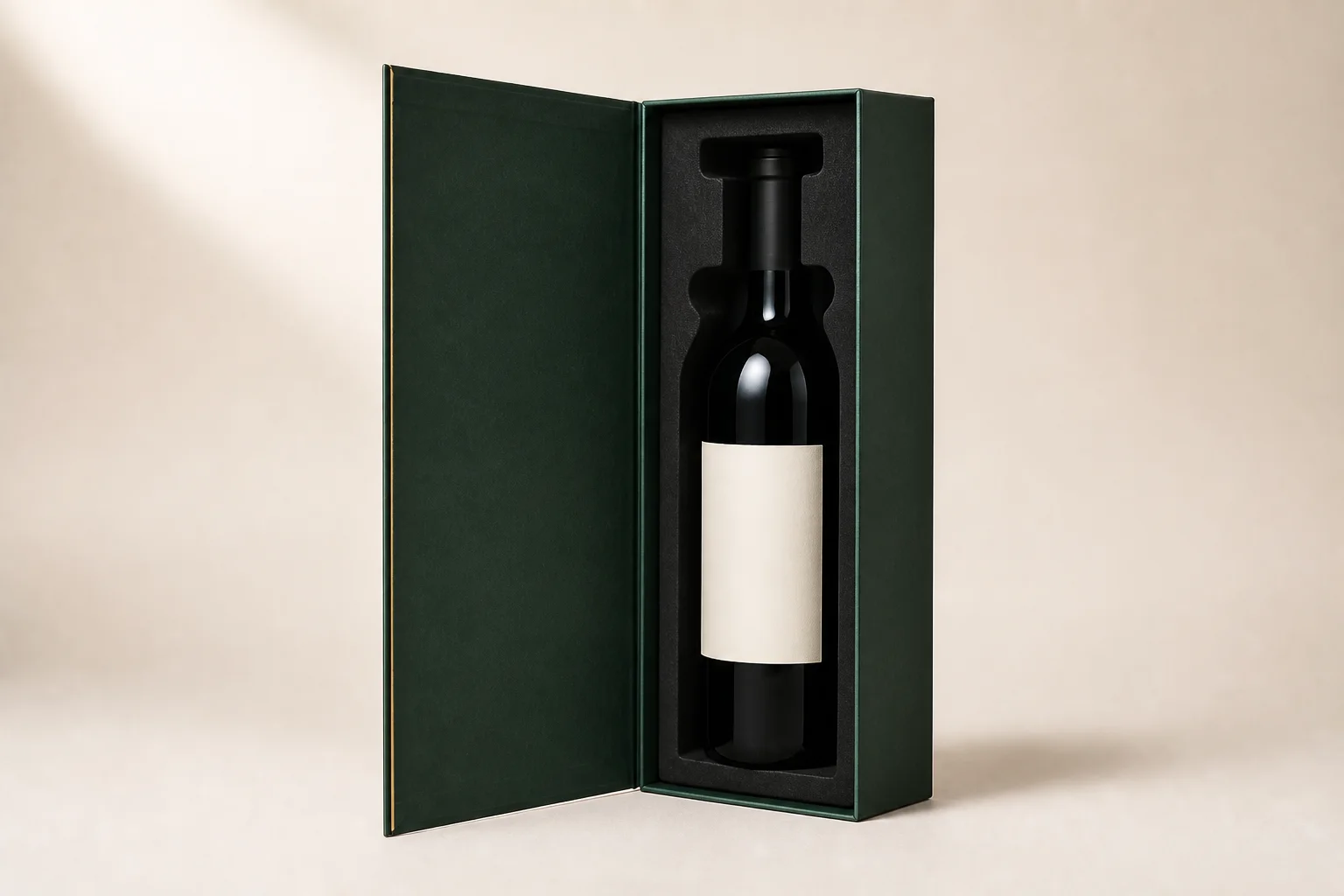
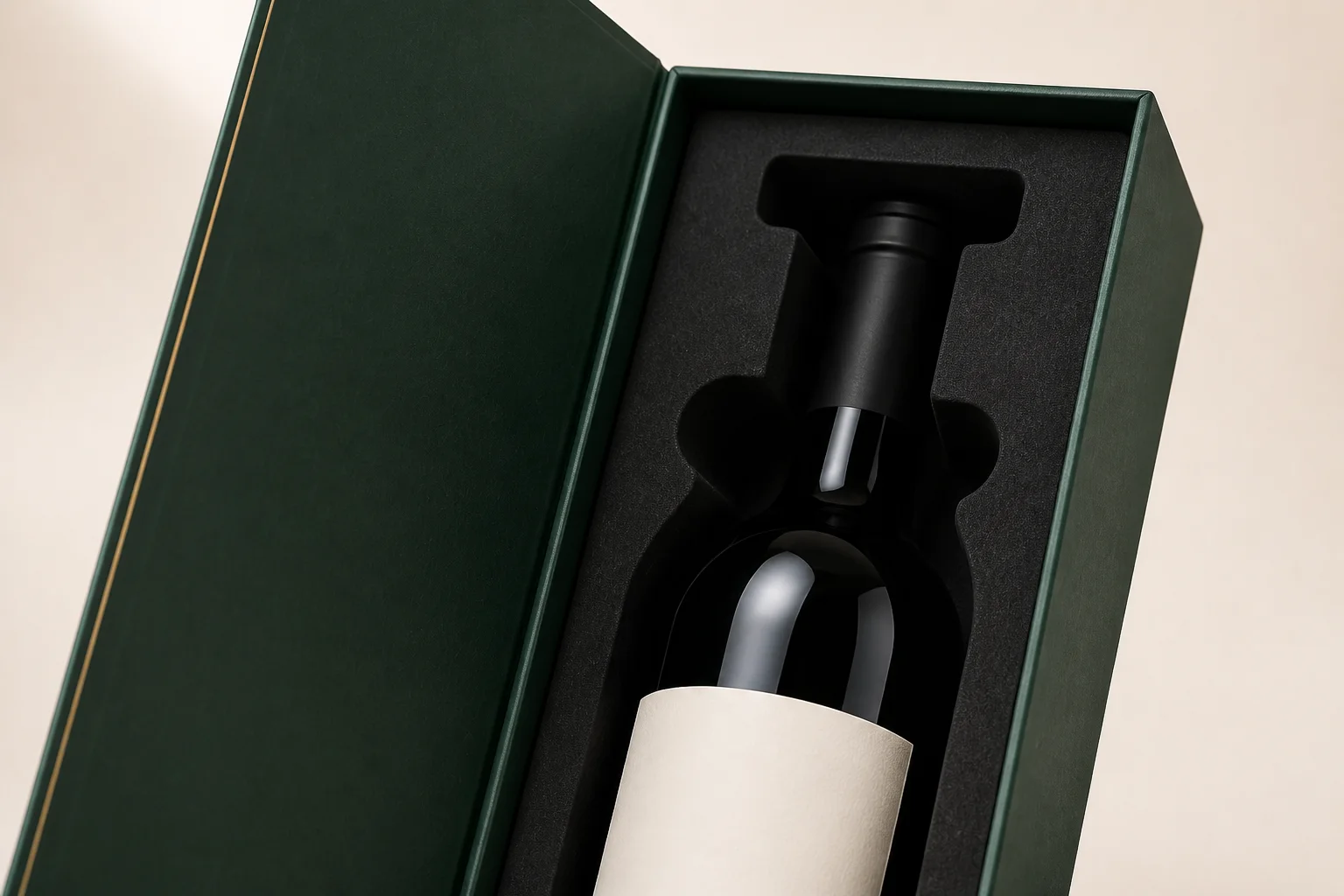
Quote-ready specification
Maximum height, body diameter or L × W, base, shoulder, neck and closure geometry
Defines the controlled clearance and insert cavity; nominal bottle volume is not enough.
Retail-ready filled weight, upright or horizontal presentation and loading direction
Changes the load path, support zones, handling method and outer-pack review.
Label, sleeve, foil, embossing, coating and glass areas that may or may not be touched
Identifies contact and rubbing risks to assess with the actual bottle and a sample.
Book hinge, lid or drawer direction, finger access and acceptable lift method
Defines removal checks to perform without relying on the closure or scraping the label.
Presentation box, inner protection, corrugated shipper, closure, case count and route
Separates gift presentation from the performance expected of the transported pack.
Structure and material direction
A typical rigid direction may use greyboard with a printed or specialty-paper wrap, but final board thickness, wrap, hinge, closure and insert construction depend on the actual bottle, finish and handling route. A soft-touch surface or premium lining does not by itself prove abrasion protection, bottle retention or transport performance.
Lock the current bottle sample or controlled drawing, filled weight, decoration, accessories, orientation and permitted contact zones.
Review box opening, bottle fit, retention, insert support, finger access and pack-out without relying on decoration to hide a geometry issue.
Approve wrap direction, artwork, color reference, foil or emboss direction, seams, corners and rub-sensitive surfaces on one revision.
Review the presentation box, bottle, accessories and shipping configuration against named acceptance criteria and any agreed test plan.
Failure prevention
Use the maximum finished bottle envelope and a controlled sample or drawing.
Map base, body and neck support together and review the load path with the filled bottle.
Mark no-touch zones and approve insert edges, fibre direction, adhesive and removal friction.
Define the distribution route and approve the full outer-pack configuration separately.
Record the exact pack revision, procedure, level, failure definition and evidence before testing.
RFQ handoff
Page-level sources
FAQ
Share the maximum retail-ready bottle height, body diameter or length and width, base and shoulder geometry, neck and closure envelope, filled weight, label or decoration touch restrictions and the intended presentation orientation.
No. Nominal volume does not define the external bottle geometry. Insert review requires the actual finished bottle, a controlled drawing or verified maximum dimensions, including the closure, sleeve, label and decoration.
Paperboard, corrugated, molded-fibre or foam directions can be compared after bottle geometry, weight, permitted contact areas, removal path, presentation goal and material requirements are defined. Final construction requires a project-specific sample.
Not automatically. The rigid presentation box, insert, inner protection, corrugated shipper, closure and pack count should be reviewed as one complete packed configuration for the intended distribution route.
MUGE PACKAGING's standard MOQ starts from 500 units per design. Final feasibility depends on the bottle, structure, board and wrap direction, insert, printing, finish, packing and sample requirements.
No. These sources support planning. A pass statement requires the exact packed configuration, current procedure, level, acceptance criteria, laboratory record and result. This page makes no test-pass claim.