
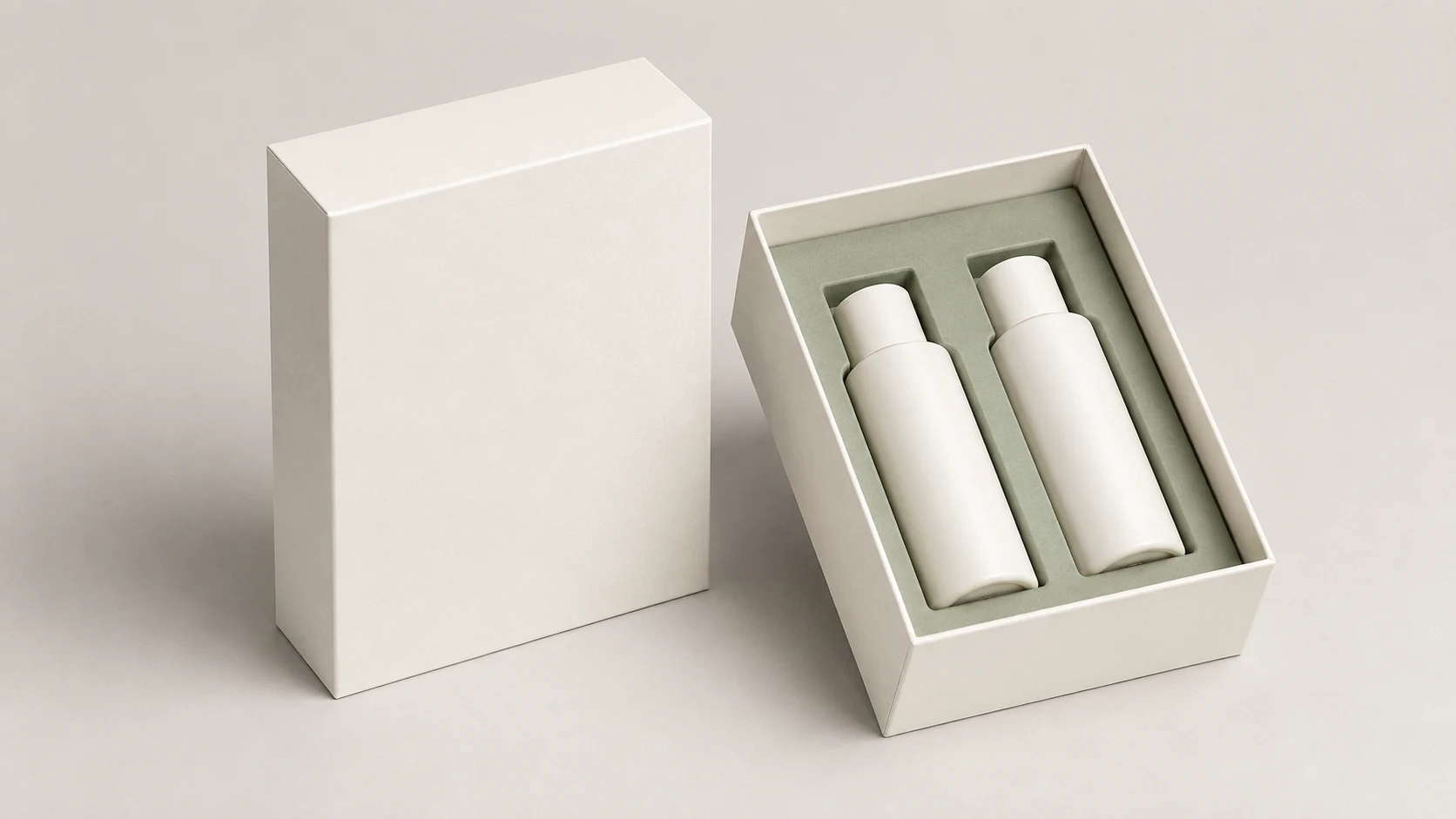
Concept A: two-bottle layout with a separate lid and base. MUGE PACKAGING design-direction concepts, not customer projects or production samples. Lid clearance, tray support, dimensions, materials and fit require project review and sampling.
Lid-and-base rigid packaging
Custom Two-Piece Rigid Box With Recessed Paperboard Tray
This separate lift-off lid and base format uses a paperboard tray set down inside the base. It is intended for reviewing the product’s presentation height, access, tray support and the lid’s closing space as one packaging system.
- Format
- Separate lift-off lid and base
- Tray
- Recessed paperboard direction
- Fit
- Reviewed from the packed product
- Finish
- Wrap and surface treatment under review
Review the vertical stack before approving the lid direction
The base, tray and packed product occupy the usable height beneath a seated lid. Start with the internal base envelope, then identify where the tray is supported and how much product is intended to remain visible. Review the lid depth against that assembled stack; an exterior box size alone cannot describe a closure relationship.
Do not assume one universal clearance or tolerance. The proposed contact points, tray edge, product cap or shoulder, opening force and sample measurement method should be reviewed for the specific product. This concept shows a discussion direction, not a proven fit or protective result.
Structure and material decisions
A recessed tray can be planned around a die-cut cavity, access notch and selected support areas. Greyboard direction, wrap paper, tray board, printing and finish are separate decisions. Confirm the proposed construction against artwork, product contact zones and the intended outer packing before sampling.
Read the lid-clearance buyer review →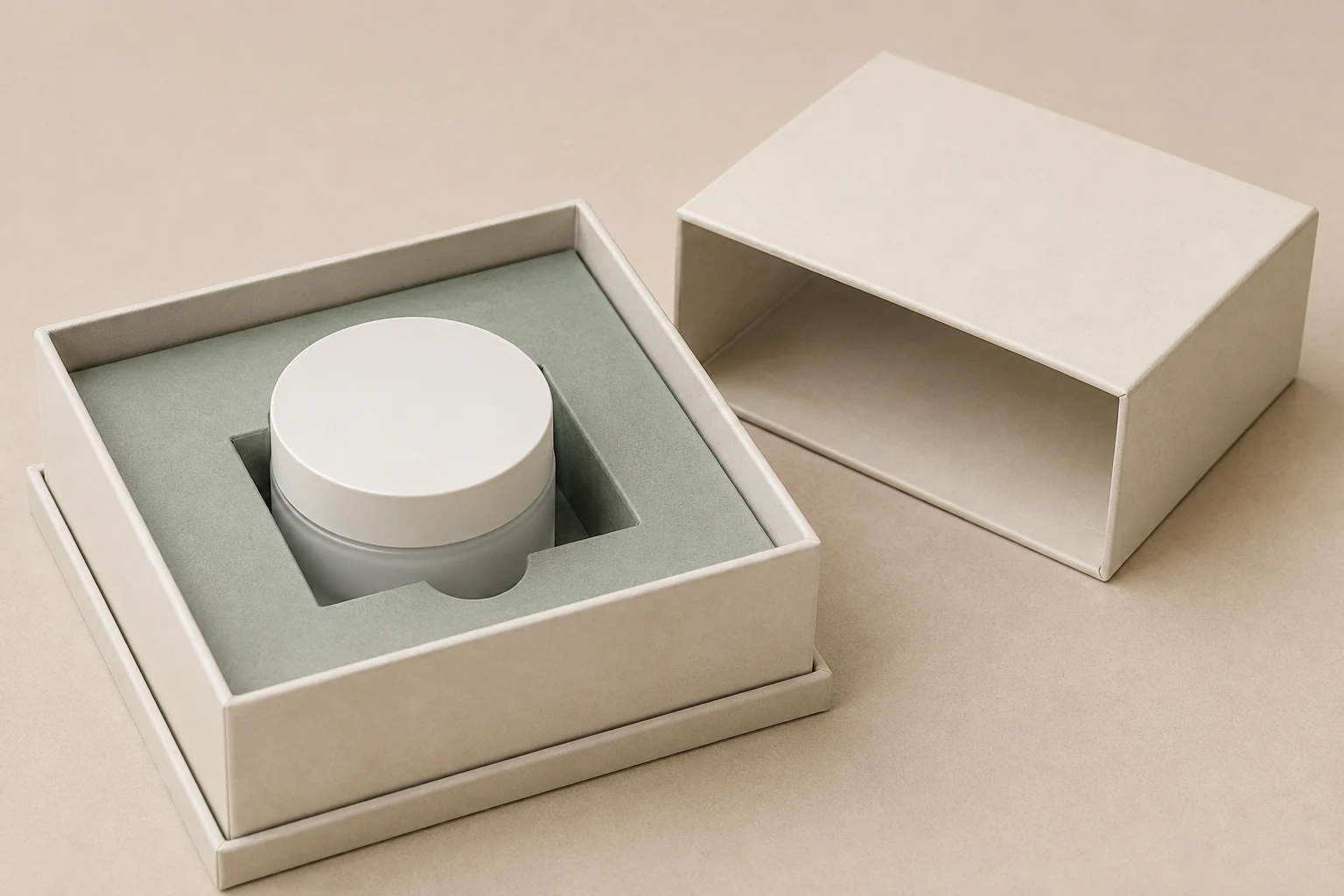
Six inputs for a comparable RFQ
Presentation is not proof of protection
A tray can improve order and presentation while still needing project-specific review of loading, removal, contact and outer-shipping requirements. Define the sample checks before treating any appearance concept as an approved structure.
Send a recessed-tray brief
Send product dimensions, product photos, desired presentation height, lid style, access direction, artwork status, quantity and destination market. MUGE PACKAGING can review the proposed stack before sampling.
Send your product brief
Reference and project review
Our physical lid-and-base reference explains sample checks for opening, alignment and wrap finish. It is not evidence of this recessed-tray construction. Use the shared-datum worksheet to prepare measurements for review; no clearance or test result is inferred from these concepts.
Andy coordinates project enquiries. Contact responsibility does not mean this particular concept has already received technical approval.