
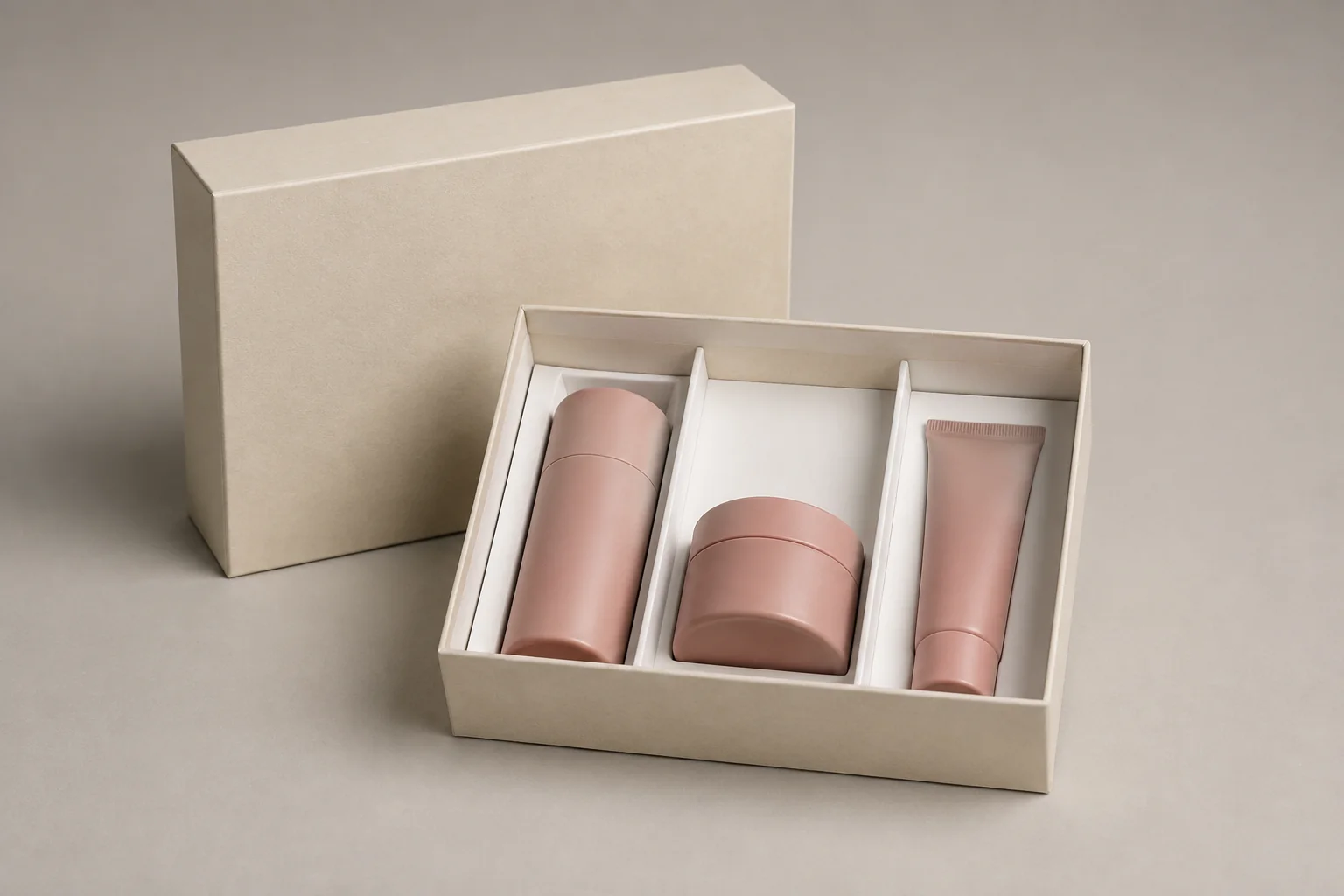
MUGE PACKAGING design-direction concept, not a customer project, factory photograph, production sample or test result. Dimensions, board grades, partition geometry and product fit require project review and sampling.
Cosmetic secondary packaging
Custom Cosmetic Set Box With Paperboard Partition
Use this two-piece set-box direction when a cosmetics team needs to review several containers together. The partition is a proposed paperboard layout, not a validated fit, dieline or production specification.
Request project reviewReview the concept from three views
MUGE PACKAGING design-direction concept, not a customer project, factory photograph, production sample or test result. Dimensions, board grades, partition geometry and product fit require project review and sampling.
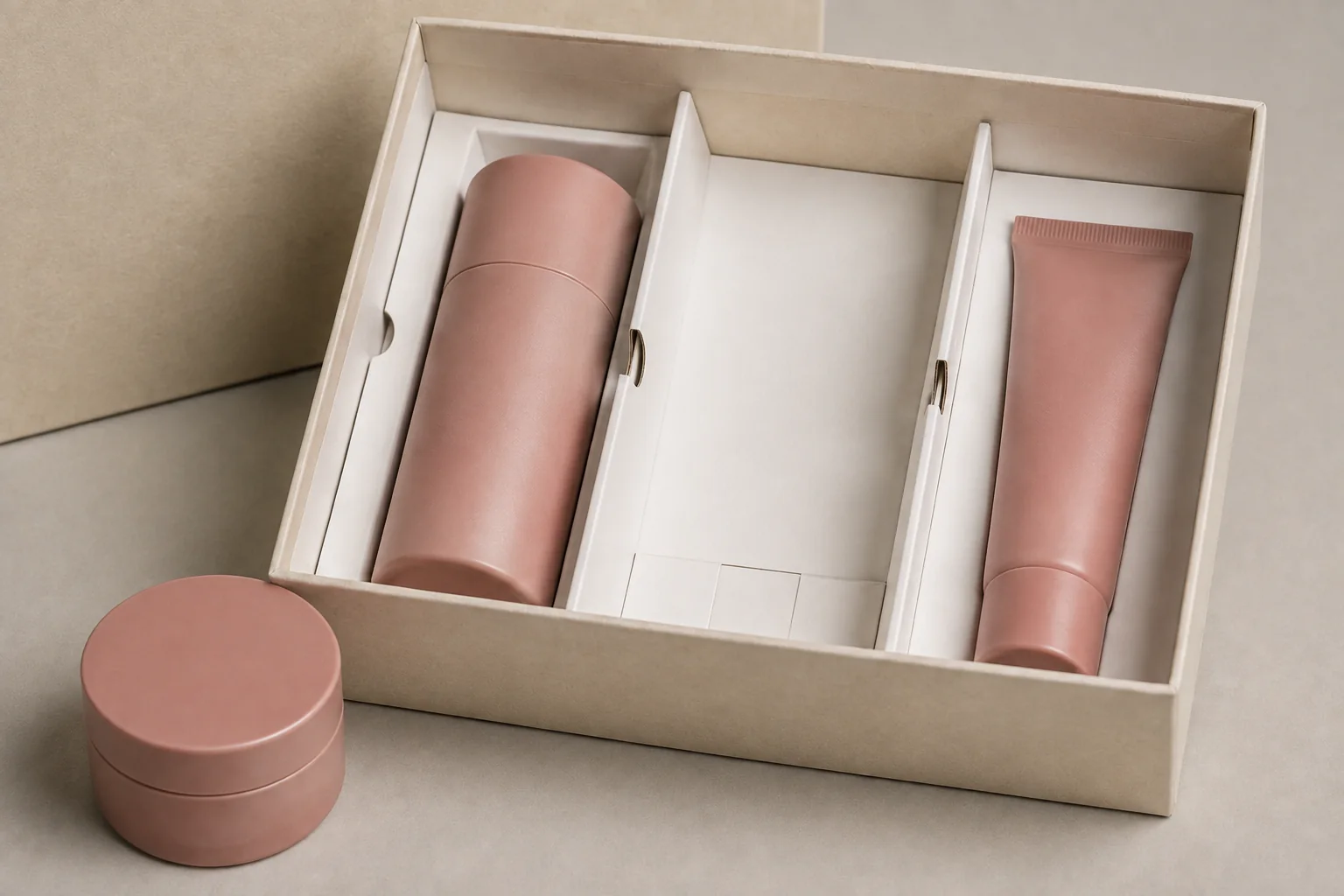
MUGE PACKAGING design-direction concept, not a customer project, factory photograph, production sample or test result. Dimensions, board grades, partition geometry and product fit require project review and sampling.
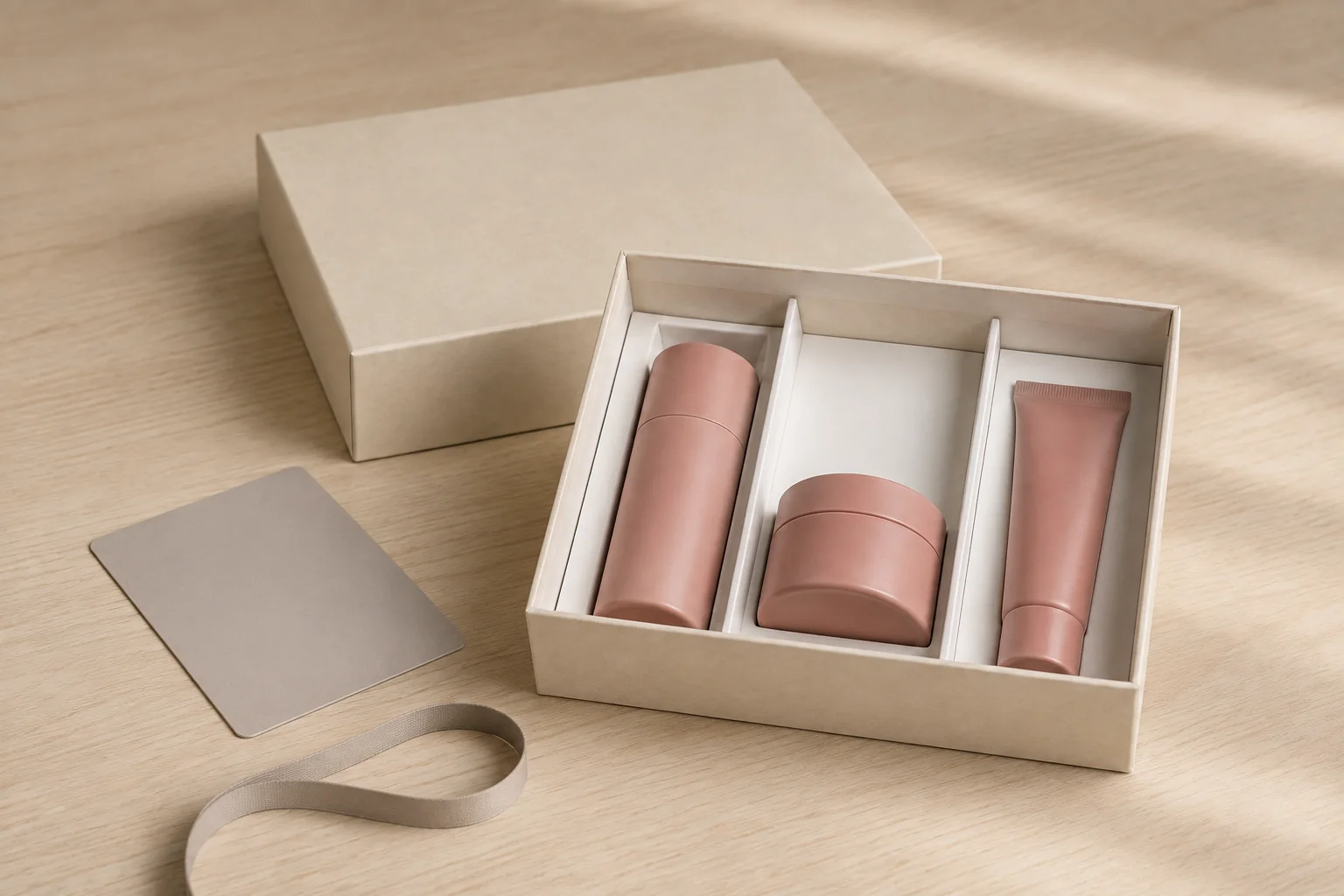
MUGE PACKAGING design-direction concept, not a customer project, factory photograph, production sample or test result. Dimensions, board grades, partition geometry and product fit require project review and sampling.
Paperboard-partition RFQ checklist
- Measure every container at its widest and tallest packed point
- Map SKU order, compartment length and width, divider height and loading sequence
- Define removal clearance, finger access and acceptable movement
- Confirm box dimensions, board direction, print coverage and finish panels
- State packing orientation, quantity direction, destination and sample acceptance checks
Fit review before quote comparison
A visual, component count or nominal volume does not establish usable compartment space. Review actual packed dimensions, labels, caps, loading order and removal path with a sample plan before confirming the final structure.
Read the cosmetic set-box fit reviewChoose the structure around the packing workflow
Compare this two-piece set-box direction with an upright cosmetic folding carton with a partition insert. The set-box brief should separate lid removal, base access and compartment layout; the folding-carton brief should identify its closure and loading direction. Choose the route from the real contents and packing workflow, then confirm it with a sample.
Record the decisions in the sample brief
- Lid and base: Record the intended opening direction, assembled base space and whether the tallest cap, pump or partition contacts the lid during closure.
- Partition and cells: Map each SKU to a cell. Record usable assembled space, divider height, removal access and the proposed loading order.
- Appearance and artwork: Identify inside and outside faces, visible wrap or print panels and the artwork revision to review.
- Sample record: Record the SKU and sample revision, actual packed dimensions, the agreed check, observed result and next revision decision.