
Secondary packaging brief
Supplement Paper Tube RFQ: Bottle, Label and Fit Inputs
For a supplement bottle that is already independently sealed, a paper tube brief needs to separate bottle fit from outer-pack artwork. A nominal bottle volume or attractive render does not answer either question. Use this guide to decide what to measure, which label files to provide and which sample questions remain open.
Prepared by MUGE PACKAGING. Andy, Chief Designer & Project Manager, is the project contact. No individual article review is claimed. No individual technical approval is claimed.
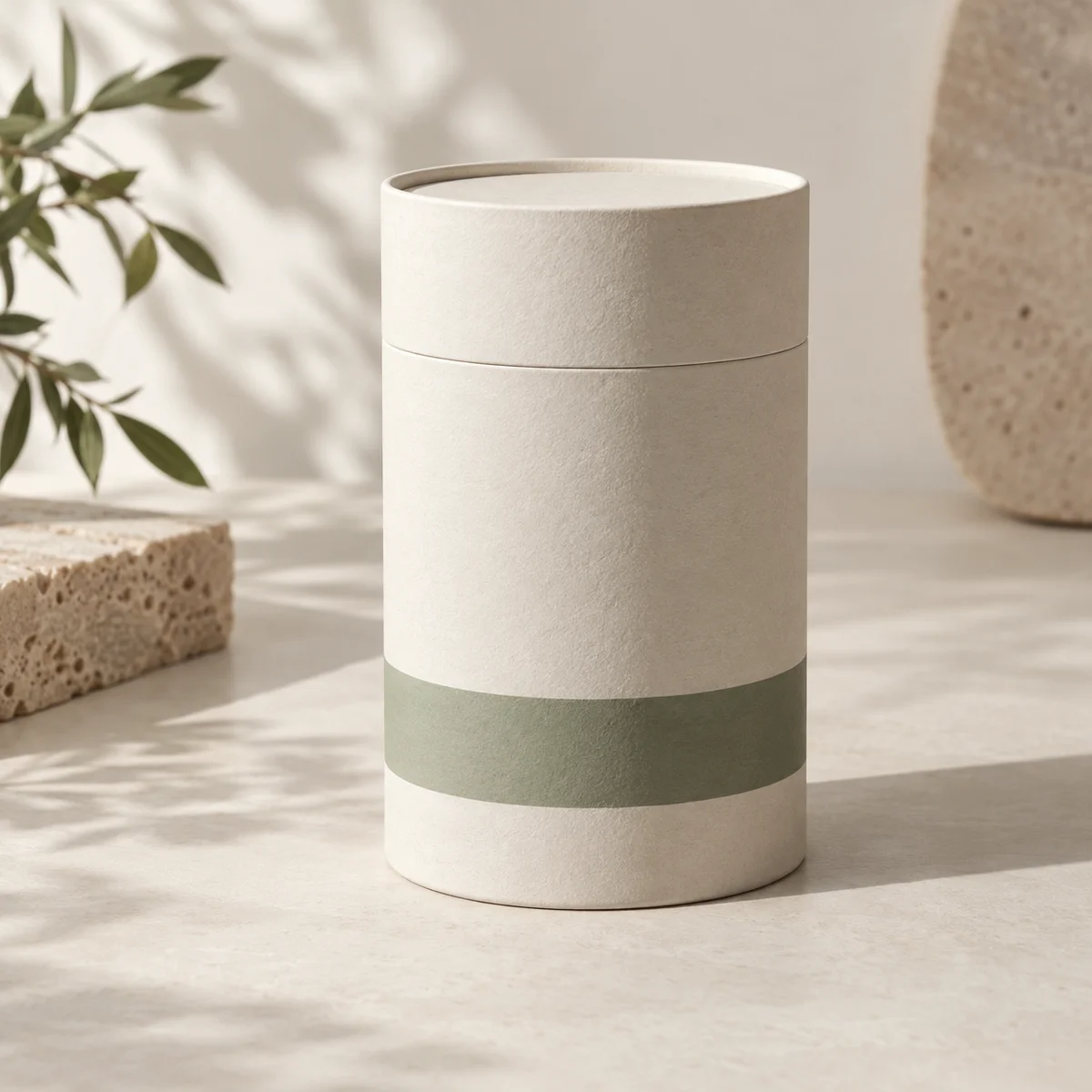
Define the boundary before choosing a tube
This brief concerns the paper tube outside a separately sealed bottle. It does not specify a primary container for loose capsules or powders. If the project needs direct contact, a barrier, tamper evidence or a special closure, identify that requirement separately for review. Do not infer those properties from a paper finish or a closed-lid image.
MUGE’s paper tube category documents its tube, lid, wrap and liner discussion areas. The checklist here applies those areas to a capped bottle and its outer label; it does not set a universal tube size.
Measure the finished bottle, then ask for usable space
Record the largest diameter across the bottle, label and cap, plus the overall capped height and packed weight. Mark the unit of measurement. State whether the bottle will be loaded upright and whether it must be removed by its body or cap. A cap wider than the body must be included in the opening discussion.
Request the proposed usable inside diameter and height, not only outside dimensions. Ask the supplier to show how the lid overlap, base and any proposed insert affect that space. Leave the clearance for sample review rather than prescribing an unsupported standard allowance.
Keep the artwork zone separate from the lid zone
Supply the buyer-approved wording and artwork version for each target market. Ask for a drawing that identifies the body, cap, wrap seam, lid overlap and any reserved variable-print area. Review which information must remain visible with the tube closed. The buyer’s responsible reviewer should confirm required wording and label placement before artwork approval.
Mark proposed decorative finish areas separately from text and code areas. Request a proof using the intended wrap and finish, then assess legibility on the assembled sample. A flat artwork approval should not be treated as evidence that the closed tube has the intended visible layout.
Choose the next sample question
Fit: Can the real capped bottle be loaded and removed along the intended path? Record interference or unwanted movement without claiming a transport result.
Liner or insert: What needs separating or locating? State the desired function first. Ask for the proposed material and geometry, then check them with the actual bottle.
Presentation: Does the closed sample show the intended label and decoration? Record artwork revision and sample identity together so another SKU is not approved accidentally.
Transit: Provide the shipping pack and handling context. If protection needs verification, agree a separate test scope; a retail presentation sample alone does not settle it.
Send one comparable RFQ brief
- Maximum bottle diameter including label and cap
- Overall capped bottle height and packed weight
- Target market and buyer-approved label artwork
- Quantity by SKU and artwork version
- Required lid style, paper wrap, printing and finish
- Liner or insert needs and bottle removal direction
- Shipping pack, sample questions and approval criteria
Use the custom supplement paper tube secondary-packaging page to review the proposed format, then send the bottle measurements and artwork brief. Include quantity by SKU and destination market. Ask the response to distinguish confirmed inputs, proposed construction and items awaiting a sample or market review.