

What a “kraft paper tube” usually means
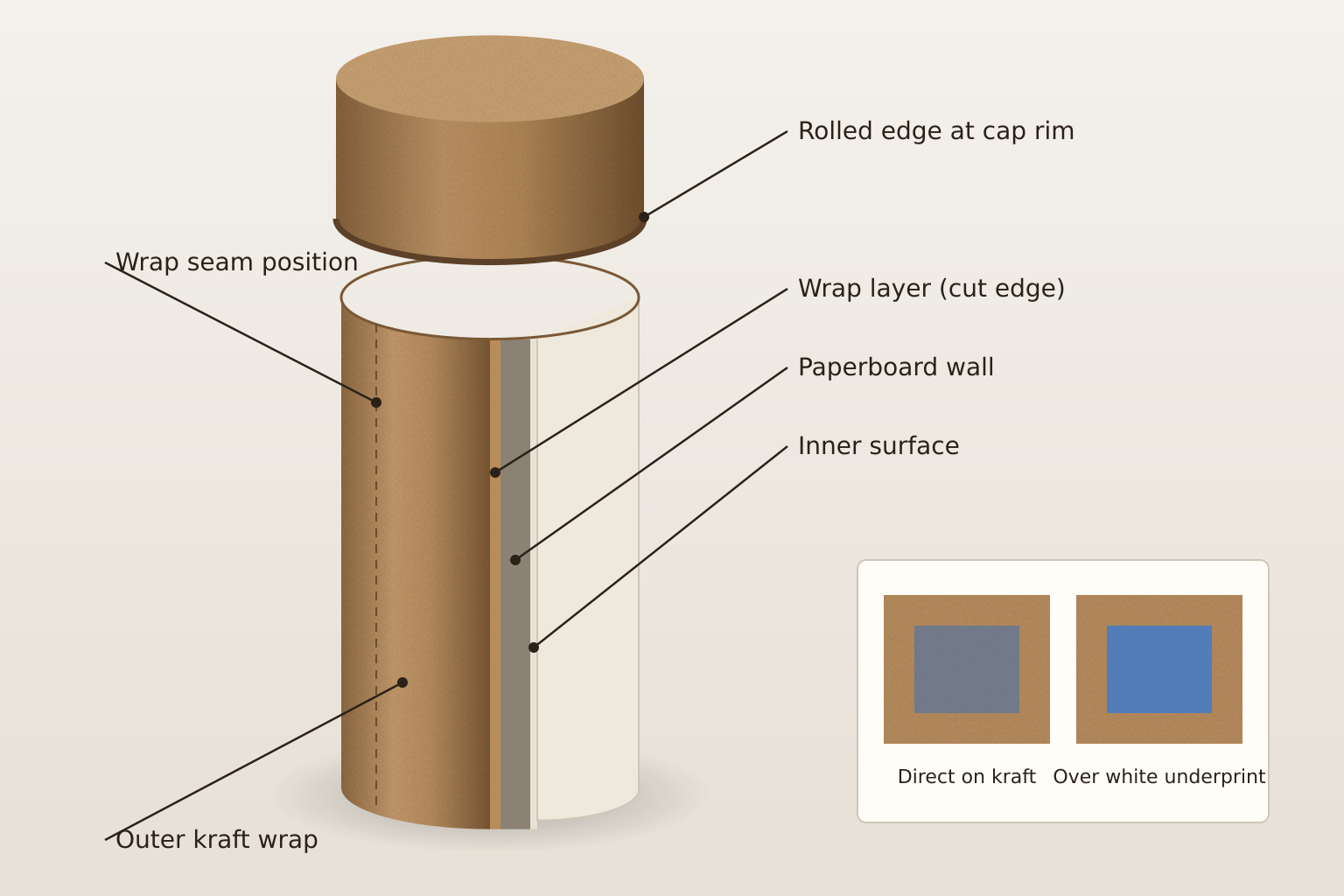
In most retail paper tubes the structure and the surface are separate decisions. The wall is built from paperboard, and an outer wrap paper is laminated around it. A “kraft tube” normally means the outer wrap is kraft paper, either natural brown or white kraft, while the wall, the inner surface and any insert are specified separately.
That matters when you compare quotes: two “kraft tube” offers can differ in wall, inner surface and cap. Ask each supplier to state these as separate lines. Our paper tube packaging page lists the structure options we usually review, including lid-and-base, paper shoulder and telescoping-lid styles.
When kraft is a good fit, and when another wrap may suit better
| Situation | Kraft wrap | Consider instead |
|---|---|---|
| Natural, earthy or minimal brand look | Strong fit | — |
| One- or two-colour logo, line art, text | Strong fit | — |
| Photographic or pastel artwork | Possible with a white underprint; colours stay softer | Coated art paper wrap |
| Exact brand colour match is critical | Needs drawdowns on the actual kraft | White kraft or coated paper |
| Product will be handled often on shelf | Add a protective varnish and check scuffing | Coated paper with lamination |
| Foil logo as the hero element | Gold and copper foil read warm on brown | Black or specialty paper for higher contrast |
Our kraft paperboard page covers the general trade-offs of kraft versus white card; below we focus on what changes once kraft is wrapped around a tube.
Printing on kraft: set expectations before artwork is final
Brown kraft has no bright white base, and the uncoated fibre absorbs ink. The practical effects are predictable:
- Colours shift darker and warmer. A bright red reads closer to brick; light blue can turn greyish. Pastels are the most affected.
- A white underprint changes the result. Printing a white layer under selected areas brings colours closer to the artwork. It adds a print step, and registration between the white and the colour must be checked on curved surfaces.
- Fine detail needs margin. Thin lines and small reversed-out text can fill in on uncoated stock.
- Screen proofs are not the reference. Approve colour on a printed kraft drawdown or a sample, not on a monitor or a proof printed on white paper.
In the brief, state the number of colours, where a white underprint is needed, spot colour references, and which elements must match an existing package.
Finishes that work on kraft tubes
- Hot foil stamping. Gold, copper and silver foil contrast well on brown kraft. Ask for a test on the actual wrap, because fibre texture affects how cleanly fine foil edges transfer.
- Blind deboss or emboss. A pressure-only mark keeps the plain kraft look. Depth depends on wrap thickness and the board behind it, so confirm it on the sample.
- Matte varnish. A thin protective coat reduces scuffing and fingerprints on tubes that will be handled in store. It slightly darkens the kraft, so compare varnished and unvarnished swatches side by side.
- Labels versus direct print. A label can carry variant or regulatory text while one kraft tube serves a whole range. Specify the label area so it sits flat on the curve.
Keep any environmental wording on the pack tied to the final material and the documents available for it. A kraft appearance alone does not support a recyclability or sustainability claim in every market.
Matching body, cap and base
A kraft tube is judged as one object, so small differences between parts are easy to see.
- Shade variation. Natural kraft varies from lot to lot. Ask whether body, cap and base wraps will come from the same paper lot, and agree an acceptable shade range against a retained sample.
- Seam and edge finish. Decide where the wrap seam should sit relative to the front artwork, and check that rolled or folded edges at the cap rim and base are clean and do not lift.
- Cap fit. Say whether the cap should slide off easily or need a firmer pull; this drives wall and wrap tolerances.
- Inside surface. If the inside is visible, specify plain board, kraft lining or a printed paper.
For tubes that hold a product such as a bottle or jar, end supports or an insert keep the item centred. Our paper tube with paperboard end supports shows one way of handling this without a separate tray.
Contents and protection: what a kraft wrap does not do
The kraft wrap is a visual and handling surface, not a moisture barrier or a food-contact layer. Tea, coffee, supplements and similar products should sit in their own sealed primary pack, with the tube as secondary packaging. If you need a liner, barrier or direct contact, describe the contents and destination market so a separate feasibility review can happen first. Share any labelling or packaging standards for your market and we will review them before confirming a solution.
Common mistakes
- Approving colours on screen and expecting the same result on brown kraft.
- Writing “kraft tube” without stating wall, inner surface and cap.
- Reordering caps or bodies without a retained shade reference.
- Treating the wrap as moisture or contact protection.
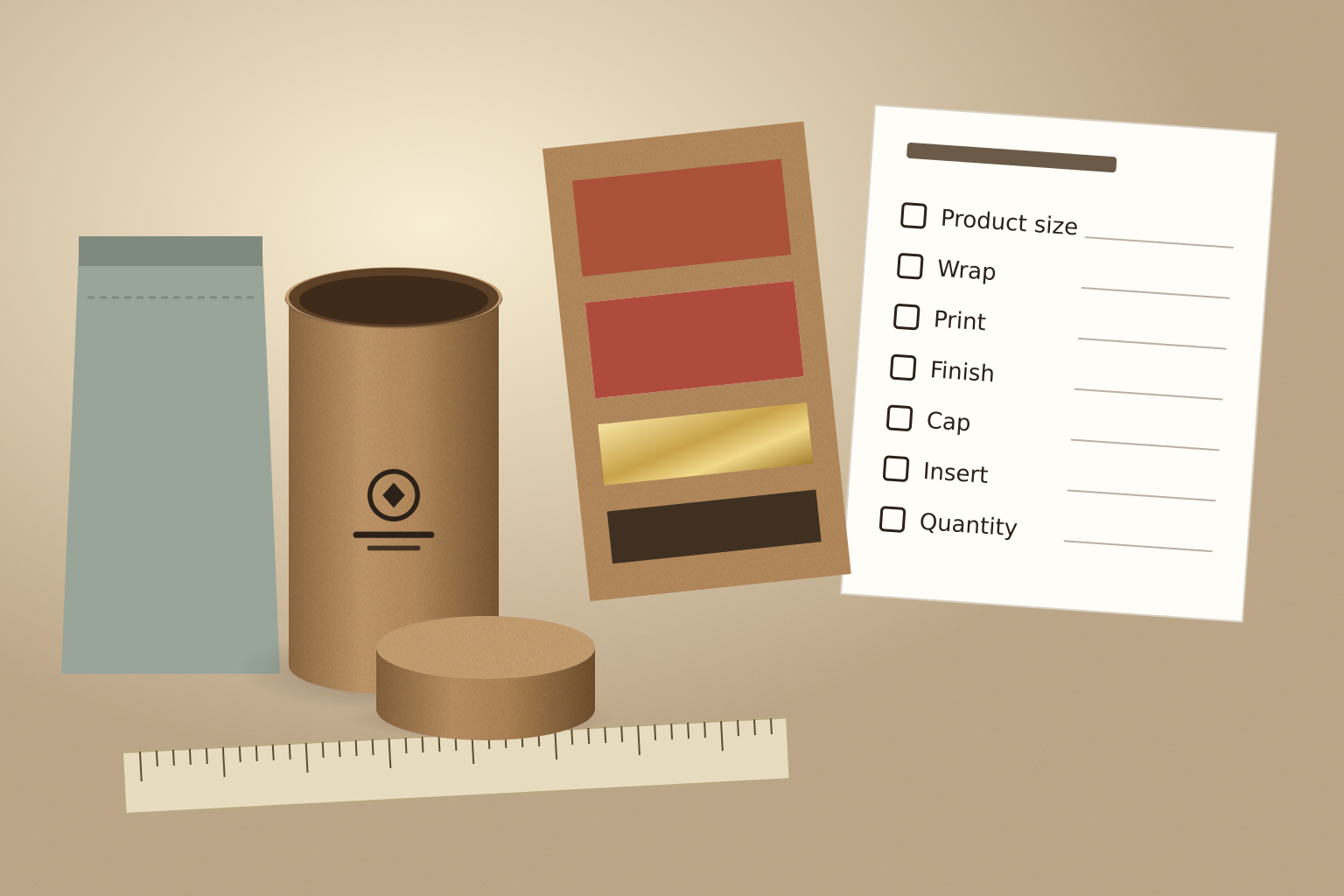
Buyer checklist for a kraft paper tube quote
| Field | What to send | Why it matters |
|---|---|---|
| Product | Diameter, height and weight of the item or primary pack | Sets the internal size and wall direction |
| Wrap | Natural brown or white kraft; any texture reference | Defines the surface every supplier prices |
| Colours, white underprint areas, spot colour references | Avoids quoting different print processes | |
| Finish | Foil, deboss, varnish, label area | Each adds a process to confirm on sample |
| Cap and base | Cap style, fit preference, inside surface | Drives tolerances and visible details |
| Insert | End supports, neck holder or none | Affects product movement in transit |
| Quantity | Quantity per size and per design | MOQ is reviewed by specification |
| Shipping | Destination and how tubes are packed for export | Affects carton count and protection |
What to check on the first sample
Check colour against the approved drawdown under the same light, foil and deboss sharpness, seam position, cap pull, rim and base edges, shade match between parts, and product fit. Record changes in writing so bulk production follows the same reference.
Frequently asked questions
- Can full-colour artwork be printed on a kraft paper tube?
- Yes, usually with a white underprint where brighter colour is needed. Expect softer colours than on coated paper and confirm them on a printed sample.
- Is white kraft the same as a coated white tube?
- No. White kraft keeps an uncoated feel and prints more softly than coated art paper.
Send your kraft tube details for review
If you are planning a kraft paper tube, send the product dimensions, artwork or reference images, finish preferences and quantity per design through our contact page. We will review the structure, wrap and print direction with you and confirm what the first sample should test before quotation.