
Start with the product and the size reference
State the packed product’s length, width, height, weight, orientation and fragile points. Then say whether each requested dimension describes the finished internal size, finished external size or another agreed reference. If the brief leaves this open, two suppliers can quote different carton sizes while appearing to quote the same job.
Use
Product dimensions, weight, orientation and any sensitive areas.
Define
Internal versus external finished dimensions and the measurement unit.
Show
A reference product, drawing or photography when the shape affects insertion.
Keep open
Unknown details should remain explicit open items for supplier review.
Specify the carton style and dieline language
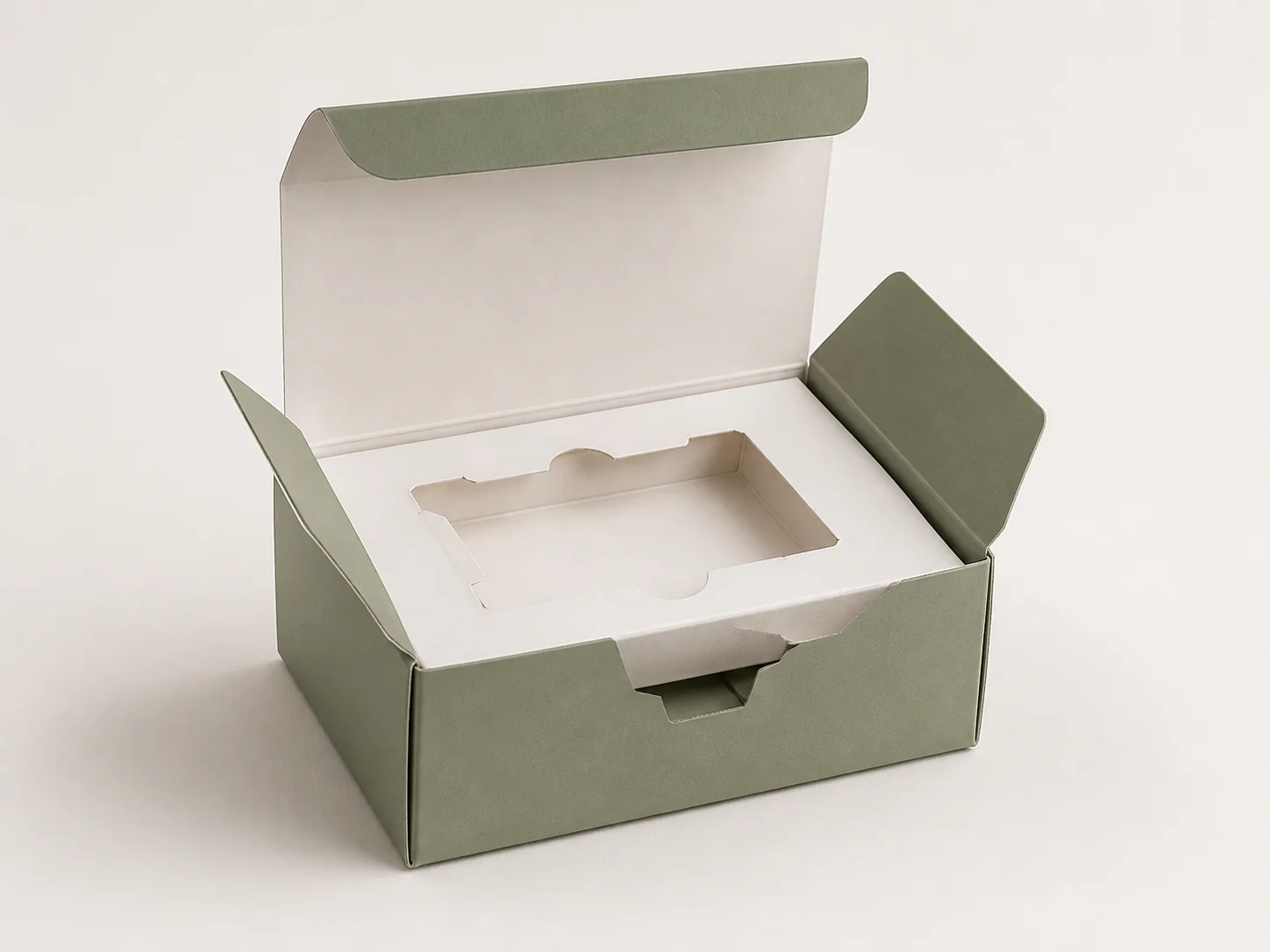
A folding carton is a paperboard package that can ship flat and be formed for use. The Paperboard Packaging Council overview explains the format distinction, while the ECMA folding-carton design-style reference can give buyer and supplier a common way to describe a style. It is a language aid, not a substitute for the confirmed project dieline.
- Carton style, opening and closure direction, glue area and locking method
- Dieline availability, revision status and panels that carry barcodes or required information
- Whether cartons are delivered flat or assembled, and how they are packed for shipment
- Any display, opening or handling condition that affects the carton structure
Keep board grade, grammage and caliper as separate fields
Do not assume a grammage alone defines how every carton will feel or fold. A useful RFQ records board grade, grammage and caliper direction separately, then adds grain direction and print-surface needs where relevant. The ISO/TC 130 print-production standards guide is a framework for treating paper, board and process specifications as defined inputs rather than generic quality claims.
Coated paper and white cardboard in common 250/300/350gsm directions can be a starting point for discussion, not a pre-approved material specification. The final board, caliper, grain direction and fold behaviour should be reviewed with the confirmed carton structure and project brief.
Write print and finish requirements by panel
Name the printable faces, CMYK or spot-colour direction, colour reference, artwork file status, proof expectation and the position of required labels or codes. For finish, describe the exact panel or feature: a foil logo location, spot-UV area, lamination direction or emboss/deboss detail. “Premium finish” leaves too much for a supplier to interpret.
Printing conditions, colour-management expectations and proof references should be agreed before production approval. This guidance does not promise zero colour variation or claim a project has passed a particular print standard.
Make the insert a fit-and-handling decision
An insert brief should include the product’s actual size, loading direction, removal path, cavity geometry, material direction and the desired fit. The paired custom paperboard folding carton with folded insert shows a MUGE design direction only; it does not establish a final dieline, board grade, bottle fit, test result or production approval.
Separate sample review from transport testing
A structure or appearance sample can help review carton construction, graphics and loading. It is not the same as a transport test. The ISTA test-procedure overview distinguishes test purposes, and ISTA’s re-test guidance notes that changes to the product, package, materials, inner packaging, closure or distribution system can require a new assessment of the test approach. The programme, distribution route and acceptance criteria must be set for the actual project.
Copy this folding-carton RFQ field table
| Field | What to specify |
|---|---|
| Product and size | Product L × W × H, weight, orientation and a clear internal or external finished-size reference. |
| Carton style | Style, closure, opening direction, dieline status and flat or assembled delivery. |
| Board | Grade, grammage, caliper direction, grain direction and printable surface. |
| Print and finish | Artwork status, colour reference, proof, panel-specific finish and code locations. |
| Insert and packing | Cavity, loading/removal direction, fit target, inner/master-carton packing. |
| Samples and acceptance | Sample type, review points, required tests, destination market and acceptance conditions. |
Common failures and the correction
Only a product photo
Add measured dimensions, weight, orientation and what the image does not show.
Only a grammage
Add board grade, caliper direction and grain direction for the reviewed carton structure.
Finish named without a panel
Mark the precise foil, UV, lamination or emboss location on artwork or a dieline.
Insert described as decorative
Define cavity geometry, loading/removal direction and the desired fit before sampling.
Sample called a transport test
State the actual distribution route, test programme and acceptance conditions separately.
Each supplier gets a different brief
Send the same specification and open-item list to each supplier before comparison.
Folding-carton RFQ FAQ
What is the minimum information for a folding carton RFQ?
Start with the packed product, finished-size definition, carton style, board direction, print and finish requirements, insert need, quantity, packing method, target market and sample or acceptance requirements.
Is grammage enough to specify folding-carton board?
No. Grammage and caliper are separate fields, and the final board direction also depends on the carton structure, grain direction, print and finish plan. Ask the supplier to review the complete project brief.
When should a folding carton be retested?
If the packed product, carton, material, insert, closure or distribution system changes, review whether the relevant test or re-test requirement also needs to change. The required programme and acceptance criteria remain project-specific.
Primary reference framework
This guide uses the Paperboard Packaging Council, ECMA, ISO/TC 130 and ISTA pages linked above for format and process context. They support the decision framework only; actual dimensions, board, printing, testing, certification and approval remain project-specific.
Continue with the paper packaging category, the broader packaging quote checklist, or send project details through MUGE PACKAGING contact.