
Packaging RFQ guide
Foldable Gift Box Corner-Lock RFQ Guide
A useful corner-lock brief separates the flat-pack requirement from the assembled presentation. It gives each supplier the same packed-item, fold-order and sample questions rather than assuming every foldable gift box uses the same closure.
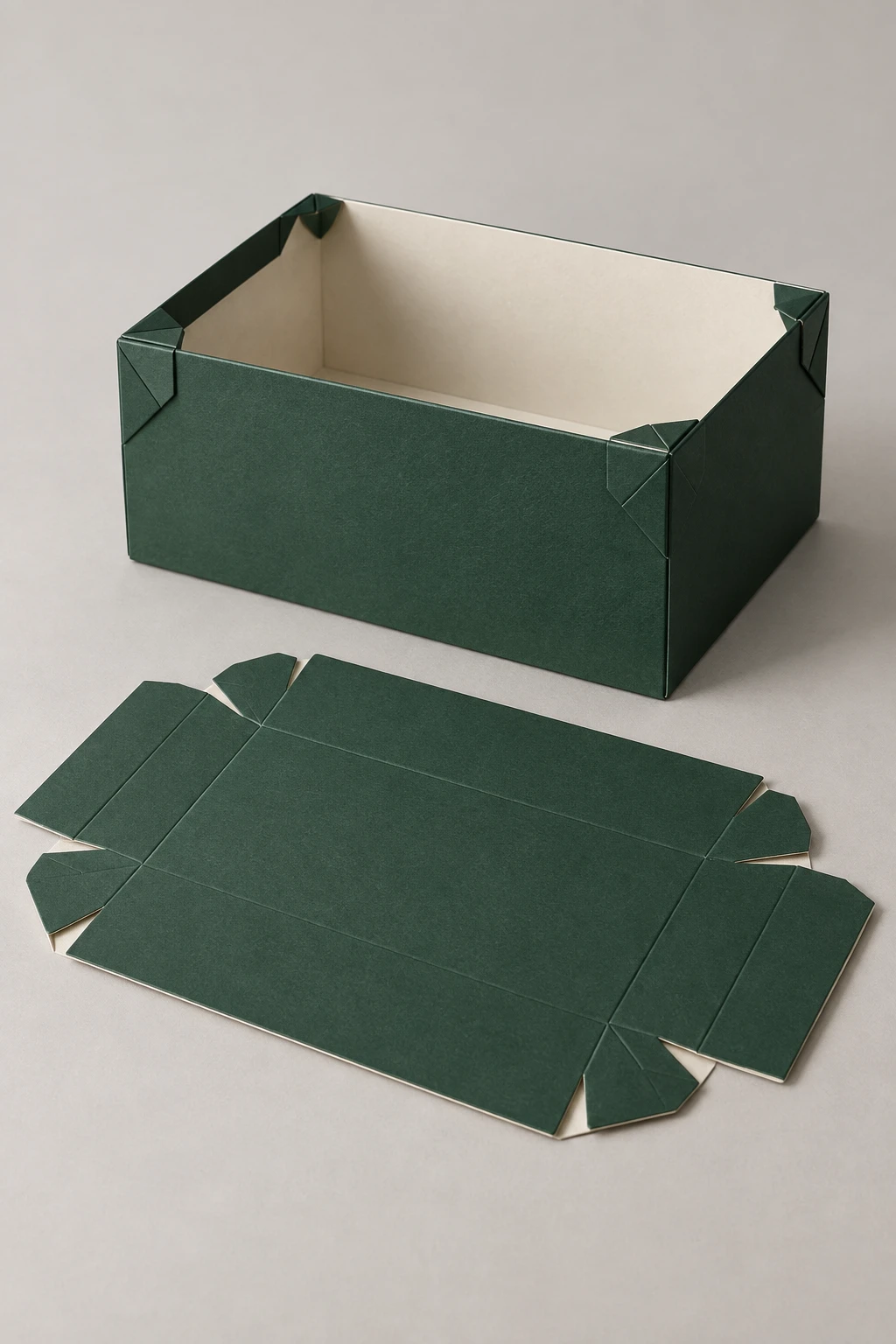
Start with two states, not one size
State the preferred flat-pack direction as well as the proposed assembled length, width and height. Identify which panels become the base and walls, and whether the lock tabs are intended to be engaged before or after loading. Do not treat a concept illustration as a measured dieline.
Make the corner-lock sequence reviewable
Ask for a proposed sequence that shows the scored folds, tabs and receiving edges. Record which corners require access during packing and which outside panels need clean artwork. A sample can then be assessed with the real contents; this guide does not promise locking strength or shipping performance.
Define the packed item and insert question
Provide the largest dimensions, packed weight, loading order and removal method. If an insert is considered, say whether it is intended to locate, separate or present the contents, then review its geometry with the actual item.
Keep artwork and transport questions separate
Send artwork status, required visible panels and finish direction with the RFQ. Specify outer shipping packaging and any agreed transit evaluation separately; neither a flat blank nor an assembled concept proves performance.
Compare samples using the same observations
Record whether the box is assembled empty or around the contents, which corner is engaged last, and whether that corner remains accessible once an insert is present. Photograph the sample before and after loading. If the sequence changes between revisions, identify the revision rather than combining observations from two designs.
An awkward final corner calls for a sequence or geometry review; it is not evidence that a heavier board is the answer. If a tab obstructs removal, define the removal path before choosing the insert. Keep these as sample questions, not acceptance claims derived from a rendering.
Send one comparable RFQ
- Flat packed and assembled length, width and height direction
- Packed item size, weight, loading order and any insert requirement
- Corner-lock and opening sequence to review, plus artwork and finish direction
- Quantity by SKU, destination market and the sample question to resolve
Use the custom foldable corner-lock gift-box page to review the format, compare the wider folding gift-box range, and send project inputs for a sample discussion.
Source and scope: the MUGE folding gift-box specification guide supports the general size, board, artwork, insert and sampling inputs used here. The corner-lock sequence is a project proposal to review, not a validated construction, transit result or independent endorsement.
Prepared by MUGE PACKAGING. Andy — Chief Designer & Project Manager is the project contact for structure and sampling discussion; no individual article review is claimed.