
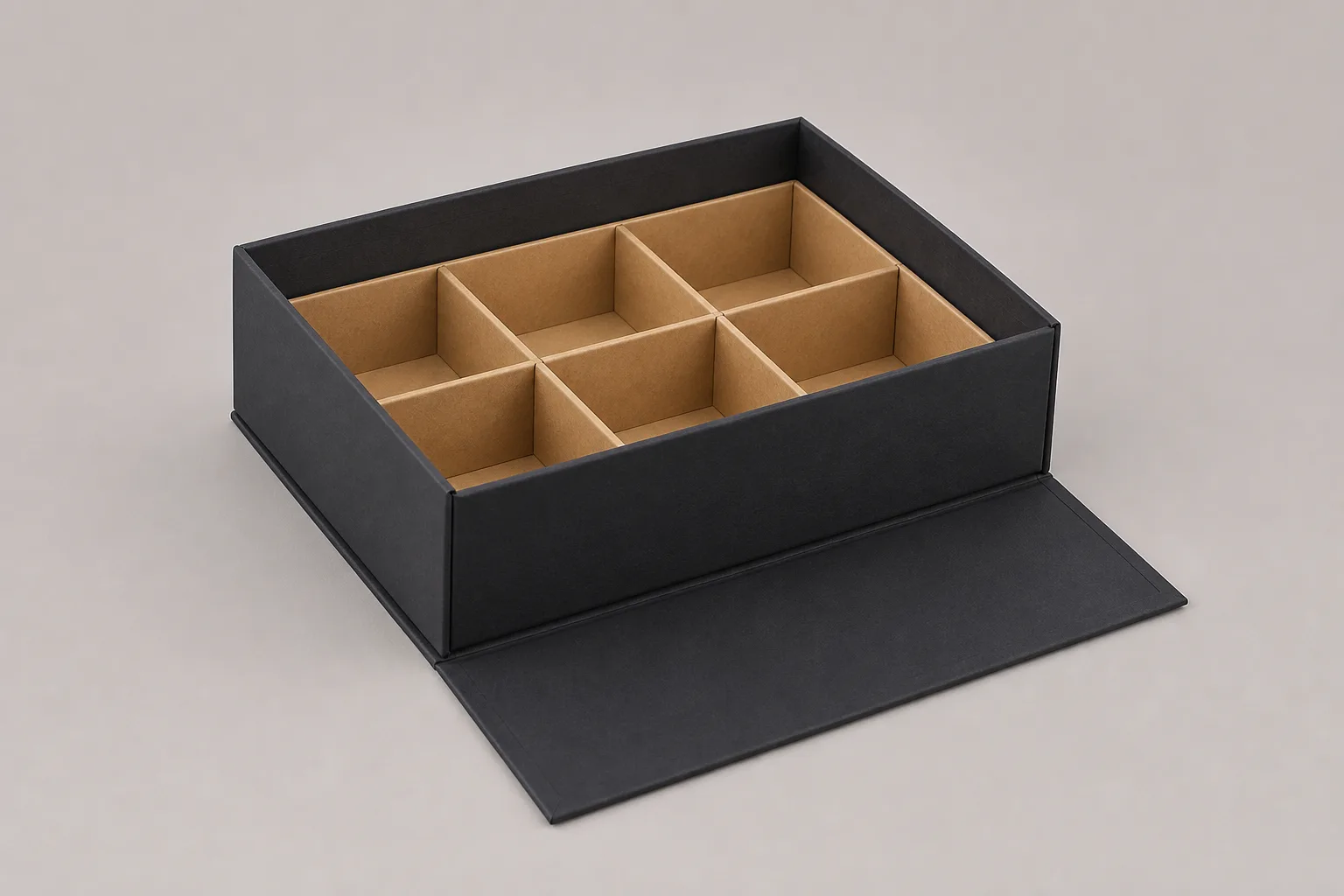
Start with loading order, not an assumed compartment size
Record the largest finished item envelope, item count, weight and orientation. Then describe whether the shell is set up first, the separate panels are interlocked next, and the products are loaded last. This order exposes access and closure conflicts that a generic box dimension cannot answer.
Decide what may change without changing the shell
A removable grid can allow compartment counts or groupings to change while the outer shell direction stays stable, but only if the revised grid still assembles, enters the shell and leaves the intended closure path clear. Mark fixed shell dimensions and changeable divider dimensions separately in the RFQ.
Do not apply one universal clearance number. Ask which dimensions are controlled, how slot engagement and compartment fit will be reviewed, and where contact with the product is acceptable. A divider pressing on a cap, pump or decorated surface creates a different sample issue from a loose compartment.
Review panel slots before artwork approval
Interlocking panels depend on panel direction, slot location and assembly order. Compare the assembled grid with the actual items, then record whether items can be inserted and removed without dislodging panels and whether the flap closes as intended. These are project sample checks; the concepts do not prove a tolerance or test result.
Six fields for a comparable removable-grid RFQ
Product envelope
Record maximum finished length, width, height, weight, count and any accessory that changes the envelope.
Compartment plan
Define product grouping, permitted contact areas and which compartment dimensions may change.
Assembly sequence
State whether the shell is set up before the separate divider panels are interlocked and loaded.
Divider panels and slots
Describe panel count, slot direction, finished grid orientation and intended contact areas.
Shell presentation
State opening direction, wrap artwork, print method and finish direction separately from the removable grid.
Sampling
Agree measurable fit, opening and visual checks before treating the structure as approved.
Keep three decisions separate
- The collapsible rigid shell defines the outside presentation and opening direction.
- Separate interlocking panels define product grouping, contact areas and loading access.
- Production approval depends on a project-specific sample; this concept does not prove retention, transit performance, food contact or compliance.
Request a grid-layout review
Send product dimensions, count, weight, orientation, compartment plan, assembly order, artwork status, quantity and destination market. MUGE PACKAGING can review the proposed shell-and-grid direction before sampling.