
Packaging RFQ guide
Skincare Cream Jar Folding Carton RFQ Guide
A jar carton quote becomes more comparable when the team describes the finished jar, the buyer-visible label zones and the next sample decision. A volume name or a product render alone does not define the outer carton’s usable space.
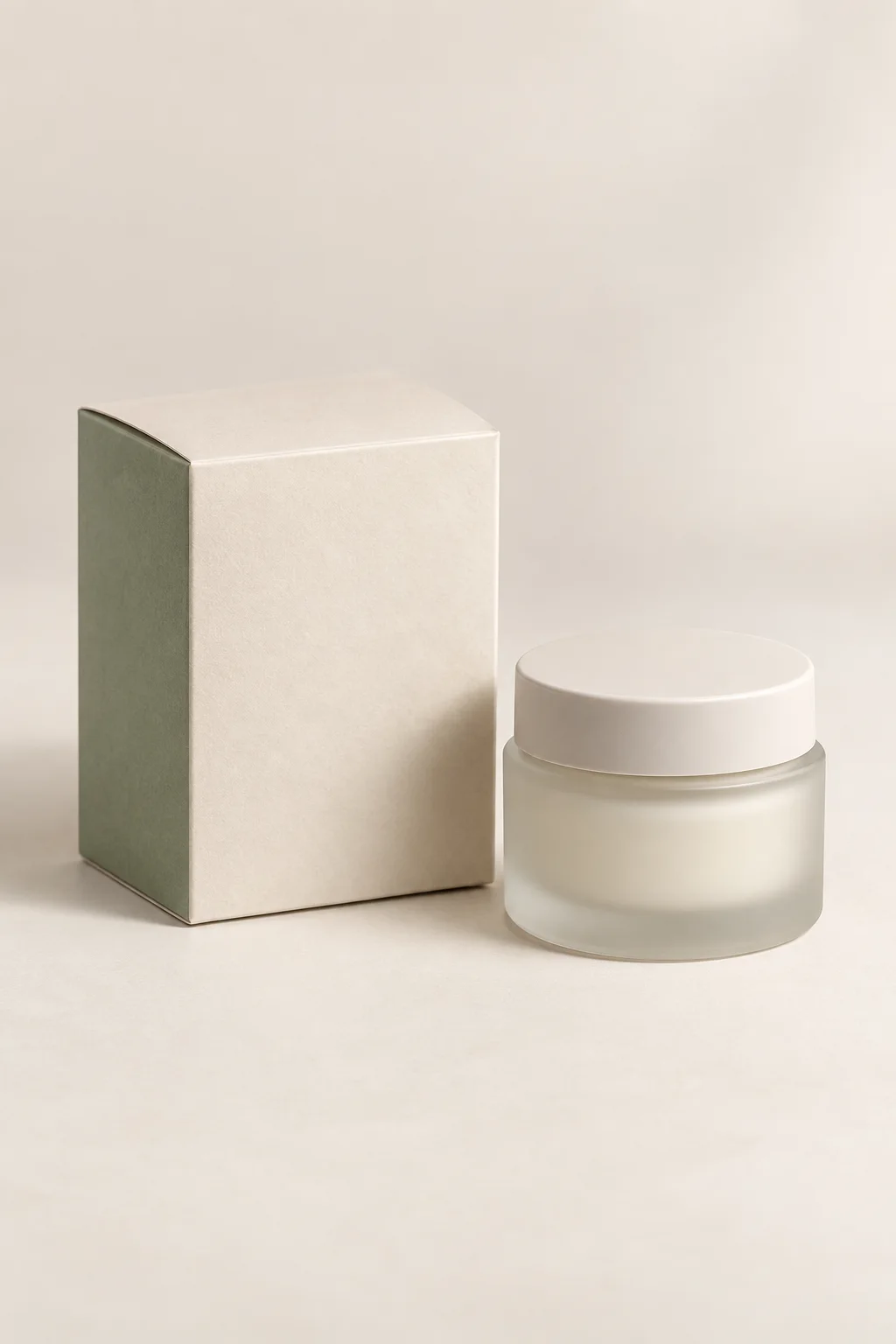
Measure the finished jar envelope
Record the largest outside diameter, overall capped height, cap overhang and label thickness where relevant. Include the actual jar weight and say whether loading and removal happen from the base, shoulder or cap. Ask for proposed usable inside space rather than assuming a universal clearance.
Separate label visibility from carton construction
Provide the artwork revision and identify panels that need readable wording, codes or decoration. Request a proposed layout that identifies the tuck closure, glue area and intended visible panels. A flat proof does not verify the assembled carton’s label visibility.
Make the insert question explicit
If the jar needs a paperboard collar or other locating feature, say what it should do: center the jar, separate surfaces or shape presentation. Review a proposed geometry with the actual jar. A concept visual is not evidence of fit, transport protection or a finished production dieline.
Keep a sample decision record by jar SKU
Compare the real capped jar against the proposed carton using separate load-and-remove, closure, printed-panel and version-record checks. A changed lid diameter or label can invalidate an earlier fit review even when jar volume is unchanged. Treat shipping performance as a separate agreed evaluation question.
Send one RFQ brief
State the order quantity by SKU and destination market alongside dimensions, material, print, finish and sampling needs so logistics and artwork assumptions are visible before quotation.
- Finished jar diameter and overall capped height, including any label or cap overhang
- Jar weight, loading orientation and the requested removal method
- Artwork files, required visible label zones and intended print/finish direction
- Quantity by SKU, destination market and the sample question to resolve
Use the custom skincare cream jar folding-carton page to review the format, compare with cosmetic packaging, and send your project inputs for a sample discussion.
Prepared by MUGE PACKAGING. Andy — Chief Designer & Project Manager is the project contact for structure and sampling discussion; no individual article review is claimed.
Packaging options and sample limits
MUGE’s cosmetic packaging range describes folding-carton formats and project-review options such as lamination, foil stamping and embossing. This is MUGE’s own product information, not independent testing or approval of the jar carton shown here.
Use those options to prepare a proposal, then record the evidence needed for your jar before approving production:
- Material: request the proposed board grade and thickness, print and finish direction, and any required material documents. A material name alone does not settle the final construction.
- Fit and assembly: review a physical sample with the actual capped jar and label. Record loading, removal, closure and artwork observations against the jar SKU and sample revision.
- Protection: specify outer shipping packaging and the evaluation needed for the shipment separately. Neither the illustrations nor this checklist demonstrate a transit test result.
This guide concerns secondary packaging only. It does not assess the cosmetic formula or establish regulatory compliance. The images are separate design concepts, not a customer project or approved production sample; final dimensions and fit require sampling.