
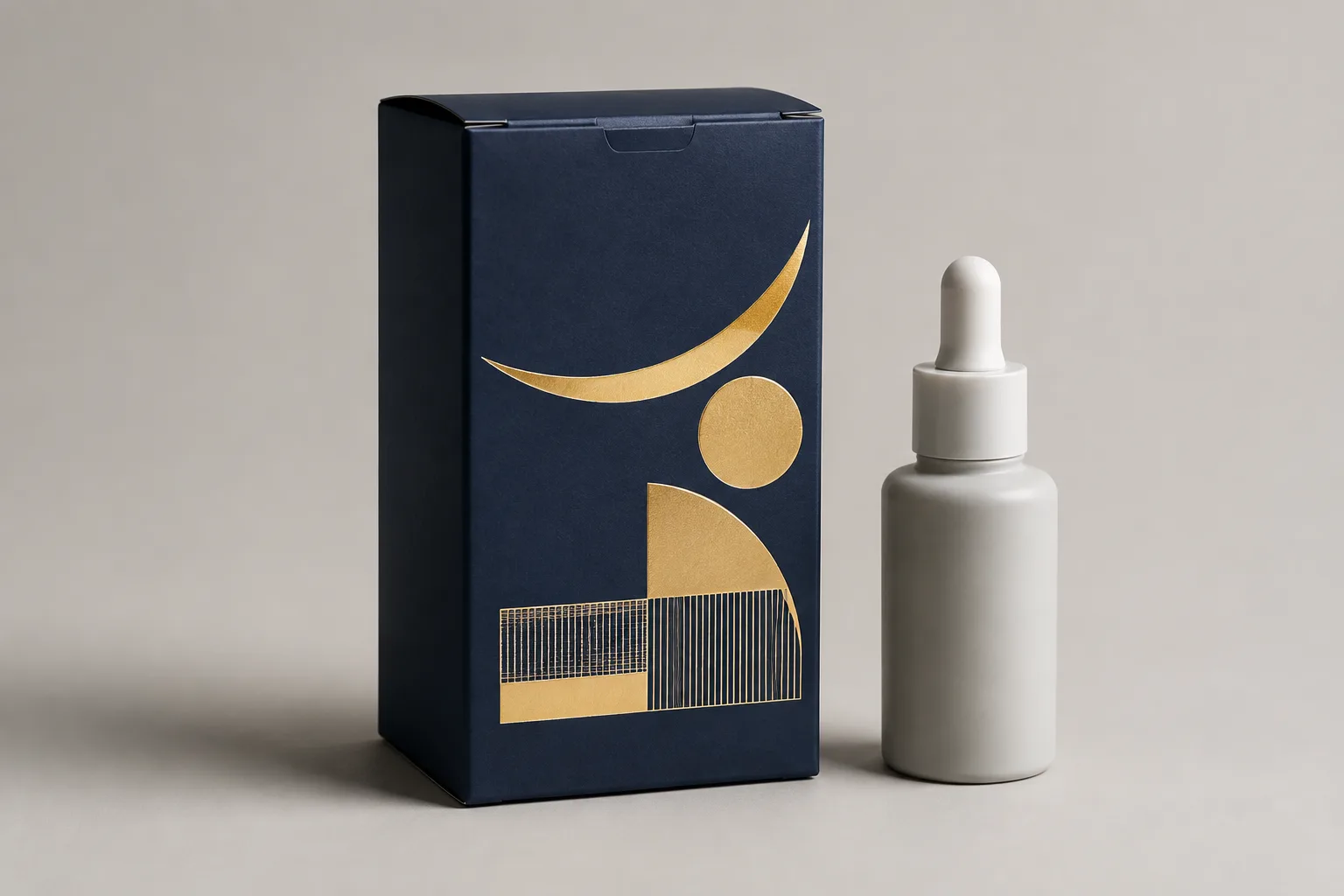
Start with the buyer view
Map the retail-facing panel before choosing a foil treatment
Identify how the carton will face on shelf, counter or fixture and which panel must remain legible. Then locate folds, glue areas and any label or barcode zone before marking a foil area. The actual registration and visual effect require sample review against the agreed artwork.
Six fields for a comparable RFQ
Display context
State whether the front panel is for shelf, counter, peg or another fixture, and show which face buyers see first.
Carton structure
Share the intended folding-carton style, opening direction, glue areas and any panel that must remain clear for a fold.
Foil map
Mark each foil area on the artwork or dieline, including the visible face, coverage boundary and nearby folds.
Artwork reference
Identify the artwork revision and the approved colour or finish reference instead of relying on a screen image.
Packing brief
State packed product dimensions, quantity direction, packing method and destination market notes.
Sample checks
Agree which fold, print and handling observations must be reviewed on the specific sample.
Compare supplier samples against one marked foil map
Give each supplier the same artwork revision and mark which edges, folds and glue areas sit beside the foil. Compare the sample upright in its intended retail orientation, then open and close it to see whether the decorated panel crosses a working fold. Photograph the same views under the same lighting; photographs help record observations but do not replace a physical finish reference.
Record what was checked, which sample and artwork version were used, and any changes still needed. Agree project-specific acceptance criteria with the supplier before approval. Do not infer foil registration tolerance, rub resistance or shelf stability from a quotation or a digital concept alone.
Avoid false certainty
A concept view is not a foil or shelf-performance result
- Specifying gold foil without marking the exact panel and fold boundary
- Treating a digital mock-up as evidence of registration or finished colour
- Reviewing a display-facing panel without the intended carton orientation
- Calling a carton shelf-ready without a project-specific handling or fixture review
- Using an illustration as proof of material grade, foil consistency or production approval
Next step
Send a carton brief that the team can review
Review the custom foil-stamped retail display carton, then send product dimensions, display orientation, carton style, artwork revision, foil map, quantity and packing notes. You can also compare structure options on folding gift box packaging or ask MUGE PACKAGING to review the project direction.
Send the RFQ fields