
Packaging Procurement · 8 min read
Delivered Gift Boxes: Match Each Batch to the Approved Sample
Prepared by MUGE PACKAGING
To reconcile a gift-box delivery, connect each received batch to its order, approved specification and retained physical sample. Confirm that those references describe the boxes delivered, then record what you actually examined. Keep a version mismatch, an observed physical difference and missing evidence as separate findings: each needs a different clarification before you can make a useful acceptance decision.
This guide is for buyers receiving finished gift boxes, including split deliveries. It starts after delivery. Choosing a supplier and approving a sample before production are earlier decisions; neither record, on its own, tells you which approved version belongs to a particular carton arriving today.
1. Give every delivery a traceable receiving record
Start with the order reference, delivery document, arrival date and identifiers visible on the cartons. Keep the supplier's batch or lot reference exactly as supplied. If it is missing or unclear, record that gap and ask for the link to the order rather than inventing a batch number.
Your own receiving reference can help locate the goods, but label it as an internal reference. It does not establish the supplier's production batch.
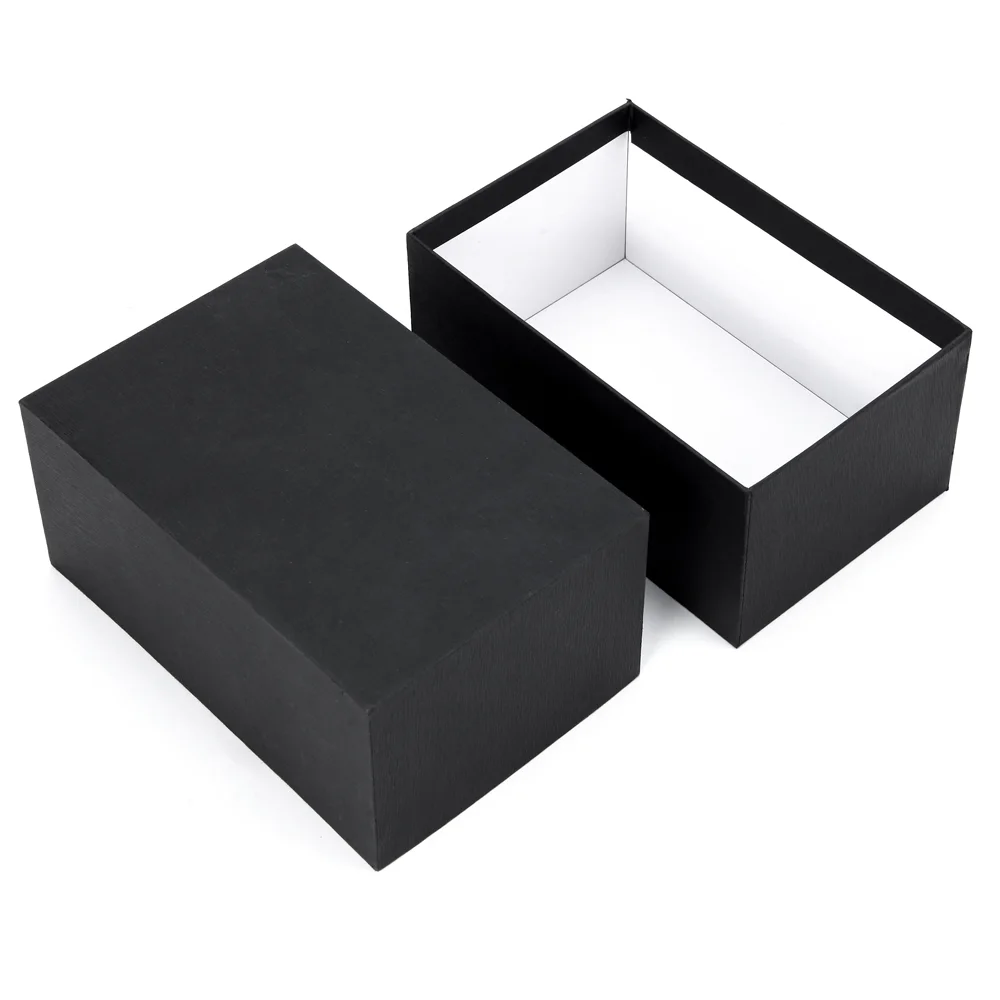
Keep different box sizes, artwork versions and component sets distinguishable. For a gift-box project, a lid, base, insert and loose accessory may arrive together or in separate cartons. Record which parts were received and which parts were actually compared. Do not let a delivery description such as “gift boxes” stand in for the agreed contents of one set.
For a foldable rigid box, record whether the agreed delivery form is flat or assembled and which components belong to the approved reference. Use the references for your own order to resolve any uncertainty.
Record quantities on the same basis. Cartons listed on a packing document, cartons received and individual boxes counted are different observations. Label each one, including any quantity that remains unconfirmed.
2. Establish the correct retained reference
Find the physical sample and written approval that apply to this delivery. Record the sample identifier, drawing revision, artwork revision and material or finish specification. Include the approval date and the person or role responsible for that approval where those details are available.
A familiar-looking box is not enough to establish the version. Check whether a later change affected the size, insert, opening, printed panel, finish or packing arrangement. Ask the supplier which approved revision the delivered batch follows and which document connects the carton or batch reference to that revision.
Also check the scope of the retained sample. A blank structural sample may be relevant to fit or assembly while leaving printing unapproved. A decorated sample may have recorded exceptions. Keep those limits with the comparison; the sample review guide explains how to distinguish sample purposes before approval.
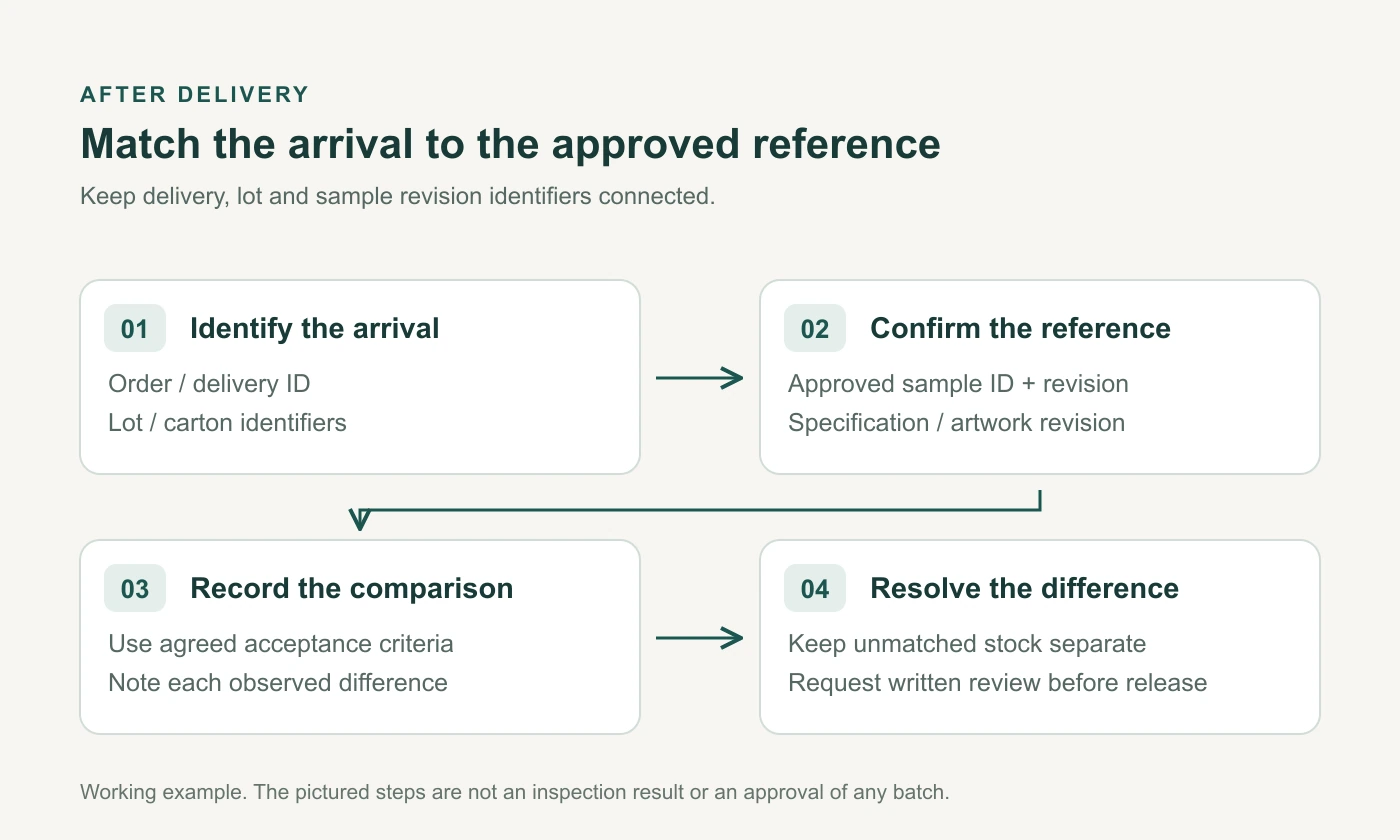
Suggested workflow for linking a delivery to its approved reference. This is a recordkeeping illustration, not a completed inspection.
3. Separate three kinds of finding
Use the following distinctions when reviewing the receiving record. They describe the evidence available, not an automatic decision about the whole delivery.
| Finding | What it means | Next clarification |
|---|---|---|
| Reference or version not confirmed | You cannot yet connect the delivered items to the applicable approved reference. | Request the approval revision and its link to the order, batch and carton identifiers. |
| Physical difference observed | You have identified the applicable reference and recorded a specific difference on the items examined. | Compare the observation with the agreed requirement; request a response addressing that feature and the affected scope. |
| Information insufficient | The reference is identified, but a requirement, observation or supporting record is missing. | Name what is missing, who will provide it and which decision remains open. |
A finding can change as evidence arrives. For example, confirmation of a later approved revision may resolve an apparent version mismatch. Keep the original entry and add the clarification instead of replacing the earlier observation.
4. Copy this blank batch-to-reference record
Use a separate record for each delivery or distinguishable group. Keep the identifiers consistent across the record, photographs, correspondence and any retained items.
| Record field | Entry |
|---|---|
| Buyer receiving reference and arrival date | — |
| Order and delivery-document references | — |
| Supplier batch or lot reference, or missing-reference question | — |
| Carton identifiers and storage location | — |
| Box variant and components received | — |
| Quantities stated, received and actually counted; basis for each | — |
| Applicable specification, drawing and artwork revisions | — |
| Retained sample identifier and approval scope | — |
| Evidence connecting this delivery to the approved revision | — |
| Cartons, components and individual items actually examined | — |
| Finding: reference unconfirmed, difference observed or information insufficient | — |
| Open question, responsible person and next review | — |
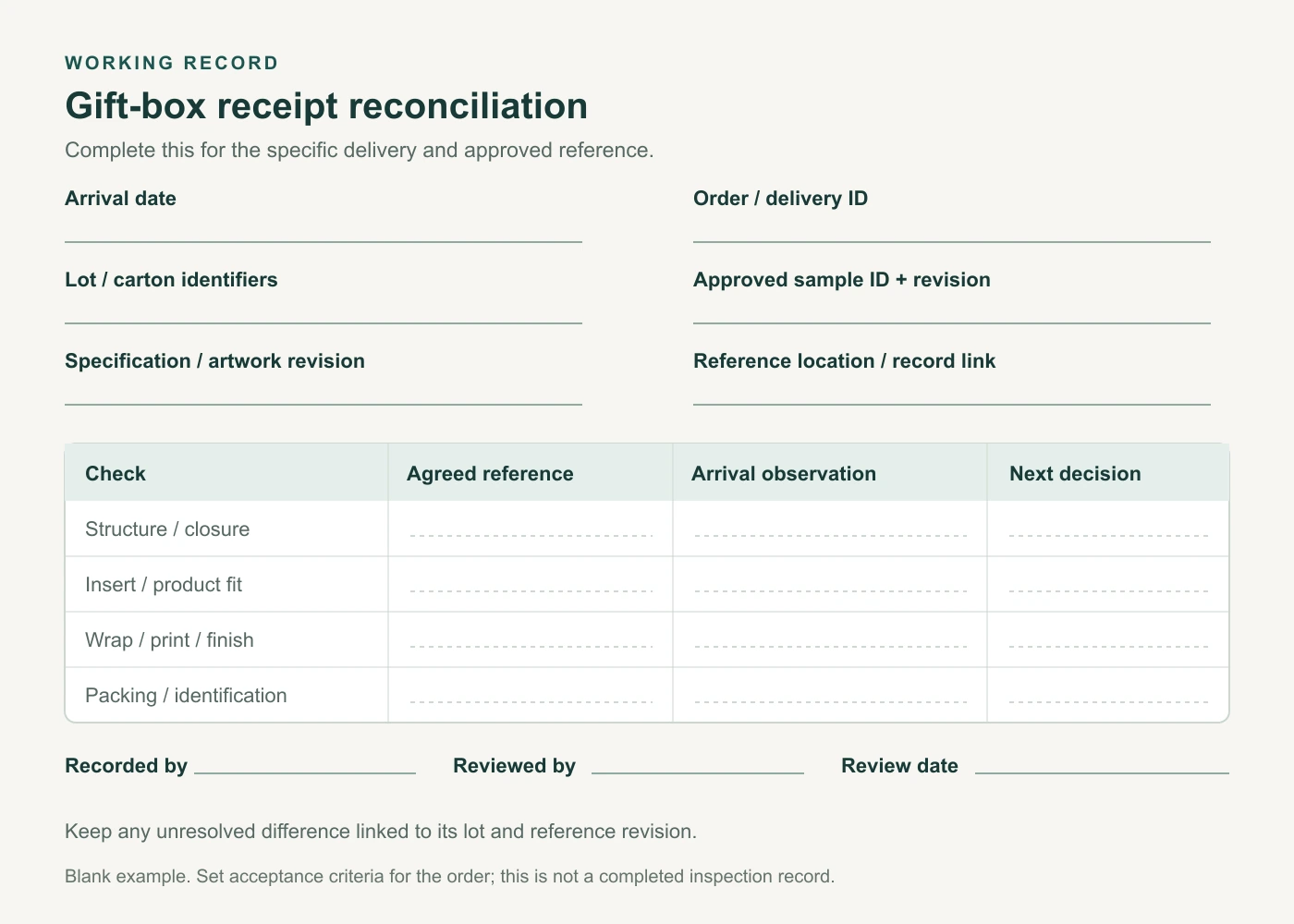
Blank working example. Enter the actual delivery, approved reference and observations; the illustration contains no inspected-batch results.
A blank field means the information has not been entered. It does not mean that a requirement was met. Record “not provided” or “not applicable, because…” when that describes the situation more accurately.
5. Make each physical difference specific
Once the references are connected, record a difference against a particular requirement. “Not the same as the sample” is too broad to guide a response.
For a gift box, useful comparison areas may include the lid and base pairing, usable interior, insert layout, opening or removal path, artwork version, visible finish and the components included in the set. Select the areas relevant to the agreed specification. If the material or finish direction was left open, request clarification rather than treating a preference as an approved requirement.
Copy one row for each observation:
| Item and location | Agreed requirement and reference | Actual observation | Evidence reference | Clarification and owner |
|---|---|---|---|---|
| — | — | — | — | — |
Identify the carton and item so another person can find what you examined. For a photograph, identify the panel or component and keep the image linked to that item. A photo can locate an issue; it does not establish an unmeasured dimension, colour match or transport result.
If you measured or handled an item, record what you did and what you observed. Keep any method and acceptance criteria agreed for the order alongside the record. This worksheet does not set an inspection sample size, tolerance or test procedure.
Keep the examined scope explicit. A difference on one identified item is an observation about that item. Establishing how far it extends across the delivery requires the inspection approach agreed for the project.
6. Ask for one clarification that can be answered
Send the supplier a concise question linked to the receiving record. Include the order and delivery references, relevant carton identifiers, approved reference and the specific observation or missing information.
You can adapt this wording:
Please confirm which approved specification and sample revision apply to delivery [reference], batch [reference] and cartons [identifiers]. Our comparison concerns [component or feature] against [approved requirement]. We recorded [observation, or information not available] on [identified items examined]. Please explain the delivery-to-revision link and respond to this point. Identify any additional evidence or review needed, and who will provide it.
Ask separately whether the reply applies to the identified items, one batch or another stated scope. A general assurance that the order is correct does not resolve an unanswered version link or a specific physical difference.
Assign responsibilities on your side too. The receiving person records the goods and identifiers; the person reviewing the specification confirms the applicable requirement; the purchasing contact keeps the supplier response connected to the issue. Your designated decision owner records the next action under the order's agreed acceptance process. One person may hold several roles, but the record should make responsibility clear.
7. Keep split deliveries and follow-up evidence separate
Do not carry a finding from the first delivery into later cartons without checking their references. A later delivery may need its own receiving record even when it belongs to the same purchase order.
If the supplier provides clarification, revised documents or replacement items, add those references to the original issue. Record whether they address the same batch and feature, and what remains unanswered. Replacement items should have their own receiving identifiers so they can be distinguished from the original goods.
Close an issue by recording the evidence considered, the decision, its scope and the person responsible. A closed paperwork question does not by itself establish that every physical characteristic of every delivered box was inspected.
Frequently asked questions
What if the approved physical sample is missing?
Record the missing reference and request the applicable approval record. A drawing or photograph may answer some questions, but it cannot automatically replace a physical reference for every feature. Identify which comparisons remain possible and which need further evidence.
Can photographs settle a difference between the sample and the delivery?
Photographs can identify items, panels and visible conditions. They are useful for locating a question and sharing an observation. Measurements, colour approval, fit and functional decisions may require the relevant physical reference and the review method agreed for the project.
Does a matching sample mean the whole batch is accepted?
Record what was examined and the scope of the decision. Comparing an identified item with a retained sample does not, by itself, establish the condition of every item in the batch. Follow the inspection and acceptance arrangements agreed for that order.
Bring the references together before requesting a review
For a MUGE PACKAGING gift-box project, send the relevant delivery and sample references for project review, along with the box type, component or feature in question and the specific information still needed. Share only the material relevant to that question, with unrelated customer details or commercial information removed.
Project contact: Andy, Chief Designer & Project Manager.
Andy is a project contact only; no individual article review is claimed, and no personal technical approval is claimed. Request project review when the applicable delivery and approved-sample references are ready.